How to Identify Pyrite (Fool's Gold): Complete Field & Lab Guide
Pyrite—‘fool’s gold’—tricks thousands of rockhounds every year. Learn the exact physical properties, field tests, and crystal habits that separate iron pyrite from real gold, plus the best U.S. collecting sites and how to clean, store, and display your specimens safely.
In this article
- What Is Pyrite? (And Why Everyone Calls It Fool’s Gold)
- Physical Properties of Pyrite (Field-Test Checklist)
- Where to Find Pyrite Worldwide & in the USA
- Pyrite vs Similar Minerals—Side-by-Side ID Keys
- Common Mistakes Beginners Make
- Value & Collectibility
- Care, Cleaning & Storage
- Historical & Cultural Significance
- Step-by-Step Field Protocol
- Frequently Asked Questions
- Ready to Put Your New Skills to Work?
What Is Pyrite? (And Why Everyone Calls It Fool’s Gold)
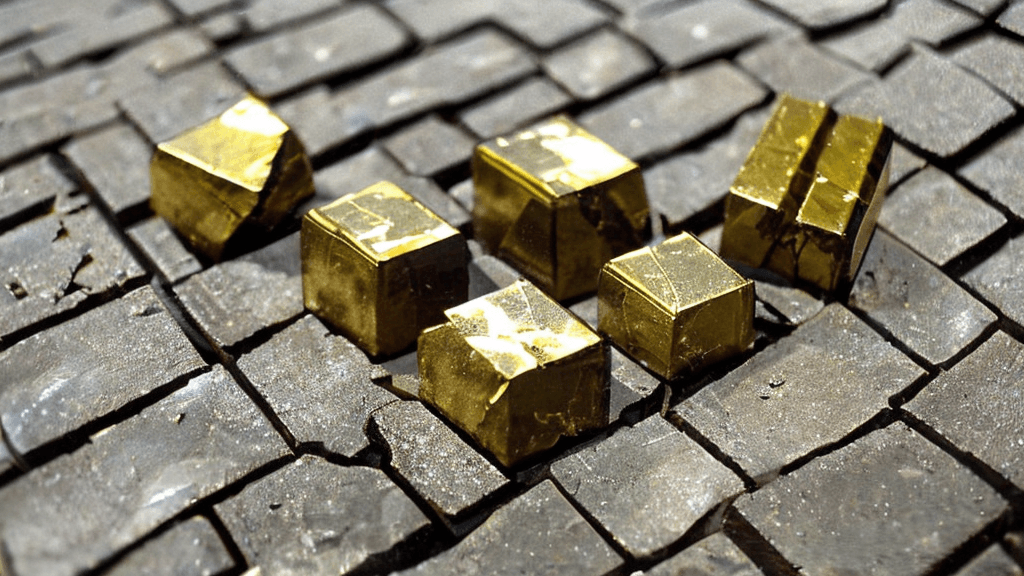
Pyrite is iron sulfide (FeS₂) and the most common sulfide mineral on Earth. Its metallic yellow luster and brassy hue have fooled prospectors—from Spanish conquistadors to modern-day weekend gold panners—into thinking they’ve struck it rich. The nickname “fool’s gold” stuck because even experienced miners once mistaked its glittering crystals for the real thing.
Quick-Look Cheat Sheet: Pyrite vs Gold
- **Color**: Pyrite is brassy yellow; gold is buttery yellow.
- **Streak**: Pyrite streaks greenish-black; gold streaks yellow.
- **Shape**: Pyrite forms cubes or pyritohedrons; gold forms irregular nuggets or flakes.
- **Malleability**: Pyrite shatters under a hammer; gold flattens.
Actionable takeaway: Snap a quick photo with the Rockhound app and check the AI streak test suggestion before you pocket that “nugget.”
Physical Properties of Pyrite (Field-Test Checklist)
Use the acronym C-H-L-S-G to remember the five key properties you can test in the field.
1. **Crystal System & Habit**
- **System**: Cubic (isometric).
- **Common forms**:
- Perfect cubes striated on faces (classic).
- Pyritohedrons (12-sided pentagonal dodecahedrons).
- Octahedrons (less common).
- Framboids (raspberry-like clusters of micro-crystals).
- **Key field mark**: Striations—fine parallel lines on crystal faces—are almost diagnostic. Gold never shows striated cubes.
2. **Hardness**
- **Mohs**: 6–6.5 (steel pocketknife ~5.5; glass ~5.5).
- **Field test**: Pyrite scratches glass and a knife blade; gold (Mohs 2.5–3) does not.
- **Pro tip**: Use the underside of a toilet-tank lid in abandoned cabins—unglazed porcelain is 7 and won’t be damaged.
3. **Luster & Color Variations**
- **Fresh surface**: Bright metallic, brassy yellow.
- **Tarnish**: Brown to iridescent blue-green after prolonged exposure.
- **Oxidation**: “Rusty” brown powder of iron oxides forms along fractures.
- **Cause of color**: Slight nickel, cobalt, or arsenic substitutions can shift hue to silvery-yellow or coppery.
4. **Specific Gravity (Density)**
- **Theoretical**: 5.02 g/cm³.
- **Field estimate**: Heft test—pyrite feels noticeably heavier than quartz (2.65) but lighter than gold (19.3).
- **DIY test**: Fill a film canister with water to the brim, drop in a sample, collect overflow, weigh. Use SG = dry weight / weight of displaced water.
5. **Streak & Other Diagnostics**
- **Streak plate**: Greenish-black to brownish-black.
- **Magnetism**: Usually non-magnetic, but some specimens contain minor magnetite and may be weakly attracted.
- **Smell**: Strike with a hammer—faint sulfur (rotten-egg) odor confirms sulfide. Gold produces no odor.
Actionable takeaway: Enter these numbers into Rockhound’s property log so the app reminds you which tests to run when you’re back in cell service.
Where to Find Pyrite Worldwide & in the USA
Pyrite forms in almost every geological environment where iron and sulfur meet. Here are the prime rockhounding hotspots.
Global Localities
- **Spain**: Navajún—home of the world’s most perfect cubic crystals up to 10 cm.
- **Peru**: Huanzala mine—brilliant pyritohedrons associated with quartz and sphalerite.
- **Italy**: Piedmont—iridescent pyrite cubes in marble matrix.
Top U.S. Locations (GPS-Friendly)
- **Herkimer County, NY**—cube-in-matrix specimens in dolostone.
- **Park City, UT**—massive sulfide veins with galena and chalcopyrite.
- **Sparta, NC**—pyritohedrons in chlorite schist.
- **French Creek, PA**—framboidal pyrite in Triassic red shale (great for kids).
- **Leadville, CO**—coarse crystals in metamorphic skarn.
Safety note: Many historic pyrite mines have unstable portals; use Rockhound’s breadcrumb GPS to mark safe parking spots and avoid trespass claims.
[INTERNAL: best-rockhounding-locations-usa]
Pyrite vs Similar Minerals—Side-by-Side ID Keys
Gold (Native Au)
| Test | Pyrite | Gold |
|-------------|----------------------|--------------------|
| Streak | Greenish-black | Yellow |
| Shape | Striated cubes | Rounded flakes |
| Malleable? | Shatters | Flattens |
| SG | ~5 | ~19 |
Chalcopyrite (CuFeS₂)
- **Color**: Brassy yellow with a **bronze** tint; pyrite is **paler**.
- **Streak**: Greenish-black same as pyrite, but chalcopyrite is **softer** (Mohs 3.5–4) and **tarnishes purple**.
Marcasite (Orthorhombic FeS₂)
- **Same chemistry**, different crystal system.
- **Habit**: Tabular “cockscomb” crystals; smells stronger of sulfur when struck.
- **Stability**: Marcasite **crumbles** to white powder; pyrite stays intact.
Pyrrhotite (Fe₁₋ₓS)
- **Magnetic**—will stick to a pocket magnet; pyrite won’t.
- **Color**: Bronze-brown rather than brass-yellow.
Actionable takeaway: Build a “streak card” by duct-taping a white ceramic tile to your field notebook; swipe each suspect and label with Sharpie for later confirmation.
Common Mistakes Beginners Make
- **Trusting color alone**—oxidized pyrite turns dull gold-brown and fools even seasoned collectors.
- **Using acid on matrix**—vinegar dissolves calcite and loosens crystals. Skip acid unless you want loose cubes.
- **Ignoring striations**—many guides show perfect cubes; nature also gives distorted masses without obvious lines. Always check multiple faces.
- **Over-reliance on magnet test**—some pyrite contains magnetite inclusions and will react weakly, causing false positives for gold-tinged magnetite.
- **Storage in damp basements**—pyrite + humidity = “pyrite disease” (see care section).
Pro tip: Photograph specimens wet and dry; water brings out luster but hides oxidation crust. Rockhound stores both versions so you can compare later.
Value & Collectibility: Is Pyrite Worth Anything?
- **Commercial**: Once mined for sulfur to make sulfuric acid; now largely replaced by elemental sulfur recovery from oil refining.
- **Specimen value**:
- Matrix cubes <2 cm: $5–$25.
- Perfect 3–4 cm cubes from Navajún: $200–$800.
- Iridescent rainbow pyrite: $30–$150 depending on coverage.
- **Jewelry**: Called “marcasite” in vintage pieces (actually pyrite); stabilized with resin to prevent decay.
- **Investment**: Not a monetary metal, but top-tier specimens appreciate 5–10 % annually as classic European mines close.
Actionable takeaway: Hunt for aesthetic balance—contrast between golden cube and dark matrix fetches premium prices. Record GPS coordinates so you can return for fresh material when prices spike.
Care, Cleaning & Storage (Prevent “Pyrite Disease”)
Pyrite oxidizes in moist air, producing iron sulfates that expand and crumble the crystal. Follow these steps:
Immediate Post-Field Care
- **Dry completely**—blot with paper towel, then place in a warm (<110 °F) oven for 30 min.
- **Remove organic dirt**—use a soft brush and dry air blower; avoid water unless necessary.
- **Kill microbes**—wipe with 70 % isopropyl; bacteria accelerate oxidation.
Long-Term Storage
- **Low humidity**: <30 % RH. Add silica-gel packets and recharge monthly in oven.
- **No wood cabinets**: Oak and cedar emit acidic vapors. Use metal or plastic drawers.
- **Consolidation**: Brush-on Paraloid B-72 (acrylic resin) seals micro-fractures without glossy film.
- **Label**: Include locale, date, and GPS; Rockhound QR codes let you reprint labels if originals fade.
What NOT to Do
- ❌ Bleach or peroxide—creates sulfuric acid inside fractures.
- ❌ Ultrasonic cleaner—vibrations cause internal cracking.
- ❌ Display in direct sunlight—heat cycles speed oxidation.
Actionable takeaway: Photograph each specimen alongside a calibration card (5 cm scale) before storage; if white “fuzz” appears later, you’ll catch pyrite disease early and can re-treat.
Historical & Cultural Significance
- **Ancient Rome**: Soldiers used pyrite to create fire—striking it against flint.
- **16th-century conquistadors**: Loaded galleons with “gold” only to smelt into worthless sulfur fumes back in Spain.
- **Victorian England**: “Marcasite” jewelry symbolized mourning; jet-black backing made metallic pyrite sparkle.
- **Modern metaphysics**: Called a “stone of action” (even though it’s technically a mineral, not a stone).
- **Environment**: Today pyrite is the #1 source of acid-mine drainage; understanding its oxidation helps geologists design greener mines.
Step-by-Step Field Protocol (Printable)
- Spot shiny brassy grain > thumbnail size.
- Pull streak plate—green-black? Proceed.
- Check shape—striated cube or pyritohedron?
- Scratch glass—yes? Likely pyrite.
- Strike lightly—smell sulfur? Confirm.
- Log GPS, take 3 photos (dry, wet, close-up).
- Bag with silica packet; label exact location.
Slip this card into your field pouch; the Rockhound app has a one-tap checklist version offline.
Frequently Asked Questions
Q: Can pyrite ever be magnetic?
A: Pure pyrite is non-magnetic, but many ore deposits mix in minor magnetite. If your specimen sticks to a magnet, either you have pyrrhotite or a hybrid ore—note it in your collection log.
Q: Does vinegar really destroy pyrite?
A: Vinegar (acetic acid) attacks carbonate matrix, not pyrite itself. The danger is loosening crystals, not dissolving them. Use vinegar only on worthless matrix pieces.
Q: How do I price a large cube I found?
A: Check recent eBay “sold” listings for similar size, locality, and damage. Add 20 % retail premium if it’s on aesthetic matrix. High-resolution photos in natural daylight are essential.
Ready to Put Your New Skills to Work?
Grab your rock hammer, streak plate, and smartphone loaded with the Rockhound app. Snap a photo of your next brassy find and let the AI double-check your ID in seconds—offline, deep in the canyon. Build a digital collection log, drop GPS breadcrumbs so you never lose a hot spot, and share your sparkling pyrite cubes with a community that loves fool’s gold as much as the real thing.
[Download Rockhound now](https://getrockhound.com) and turn every outing into a treasure hunt—no geology degree required.
Ready to start hunting?
Download Rockhound and identify your finds instantly with AI-powered recognition. Track your expeditions with GPS and build your digital collection.
Download Rockhound