How to Identify Quartz: The Complete Visual Guide
Quartz is the most abundant mineral on Earth, but telling it apart from similar-looking rocks can stump even seasoned collectors. This mega-guide walks you through every test, trait, and trick you need to confidently identify quartz in the field, recognize its many varieties, and avoid costly mis-identifications.
In this article
- Why Quartz Identification Matters for Every Rockhound
- Physical Properties of Quartz: The Checklist Every Collector Needs
- Color Variations: What Turns Quartz into Amethyst, Citrine, or Rose Quartz?
- Where to Find Quartz: Worldwide Hotspots & US Hotspots
- Field Tests to Distinguish Quartz from Look-Alikes
- Common Identification Mistakes & How to Avoid Them
- Value & Collectibility: When Is a Quartz Crystal Worth Money?
- Cleaning, Care & Display: Keep Your Quartz Sparkling
- Historical & Cultural Significance: From Stone Age to Silicon Age
- Quick Reference Cheat Sheet (Print & Laminate)
- Ready to Rock? Download the Ultimate Field Companion
Why Quartz Identification Matters for Every Rockhound
Walk along any gravel road, dig in your flowerbed, or scan a creek bed and you’ll probably spot a piece of quartz. Because it’s so common, many beginners shrug it off as “just another clear rock.” That’s a mistake. Learning to accurately identify quartz opens the door to understanding more complex minerals, spotting valuable variations like amethyst or citrine, and building a collection you’ll be proud to display. In this 3000-word master guide, you’ll get lab-quality tips you can use in the field—even when you’re offline.
Quick Win: Snap a photo with the Rockhound app’s AI ID tool to double-check your quartz finds in seconds. It works without cell service, saving GPS coordinates for every specimen.
Physical Properties of Quartz: The Checklist Every Collector Needs
Before diving into colors and varieties, memorize these five immutable properties. If a specimen fails any one of these tests, it isn’t quartz.
Hardness Test: The Gold Standard
- Quartz scores a 7 on the Mohs scale—hard enough to scratch window glass, steel knife blades (5.5), and even feldspar (6).
- Field test: Scratch an inconspicuous corner across a glass bottle. A white streak on the glass but no powder on your sample equals quartz.
- Common slip-up: Don’t use coated glass (like smartphone screens); the coating can mislead you. Stick to plain bottle or jar glass.
Crystal System & Habit
- Hexagonal (trigonal) system forms six-sided prisms that often terminate in a six-sided pyramid.
- In massive specimens, look for conchoidal (curved, shell-like) fracture surfaces—identical to broken glass but much harder.
- Drusy quartz lines cavities with tiny, sparkling crystal points that all point inward—nature’s geode glitter.
Luster & Diaphaneity
- Glassy (vitreous) luster on fresh breaks; greasy on weathered surfaces.
- Transparent to translucent; hold a strong flashlight behind the specimen. Light should pass through at least the edges—even in milky quartz.
Specific Gravity
- 2.65 average—just a hair heavier than average crustal rock (2.6–2.7).
- Heft test: A golf-ball-sized piece should feel “neutral,” neither oddly heavy nor light.
Streak Test
- White or colorless streak on unglazed porcelain (a $2 tile from the hardware store works).
- Any colored streak (yellow, green, gray) rules out quartz.
Color Variations: What Turns Quartz into Amethyst, Citrine, or Rose Quartz?
Color is the first thing we notice, yet it’s the least reliable ID marker. Treat color as a bonus clue after the physical tests above pass.
Macrocrystalline Quartz Varieties (Crystals Visible to the Naked Eye)
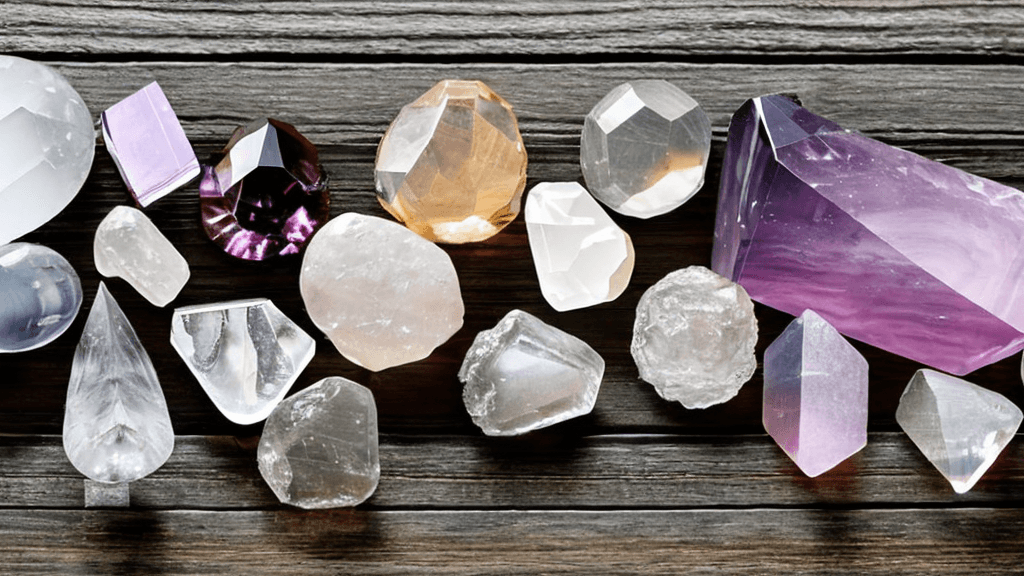
- **Clear (Rock Crystal)**: Iron-free, pure SiO₂; prized for optics and carvings.
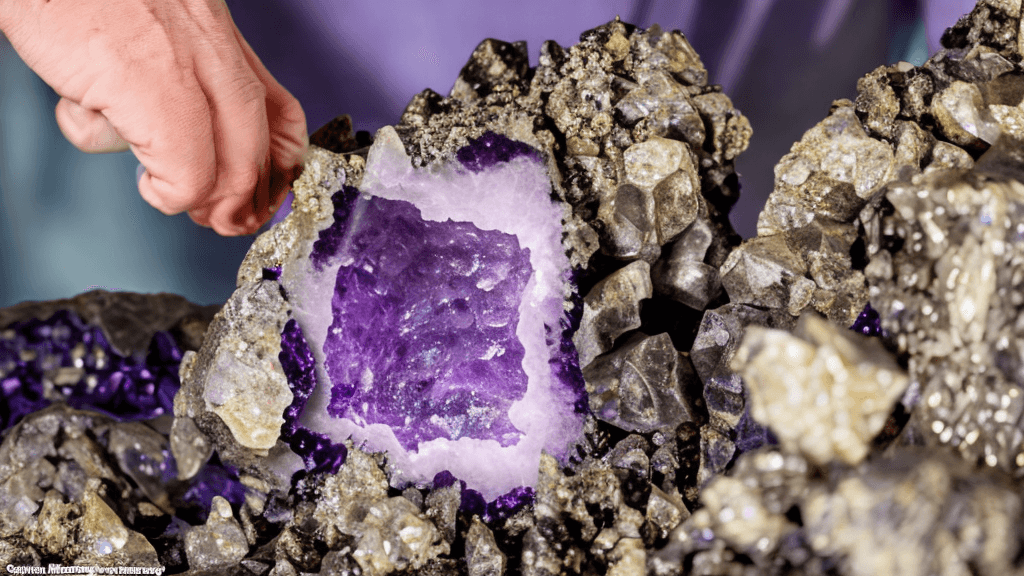
- **Amethyst**: Trace Fe³⁺ plus natural irradiation creates purple; color often zoned in triangular patterns.
- **Citrine**: Iron + heat (natural or lab-baked amethyst) yields golden yellow; natural citrine is rare—most commercial stones are heat-treated amethyst.
- **Smoky Quartz**: Natural irradiation knocks electrons out of place, producing brown to black hues; darker pieces are called morion.
- **Rose Quartz**: Microscopic dumortierite or titanium fibers create pink; rarely forms euhedral crystals—usually massive.
- **Aventurine**: Chrome-rich fuchsa mica flakes produce green sparkle; copper-rich versions appear reddish.
- **Blue Quartz: Tiny ilmenite or rutile inclusions scatter light, giving a denim cast.
Microcrystalline Quartz Varieties (Cryptocrystalline—Need a Microscope)
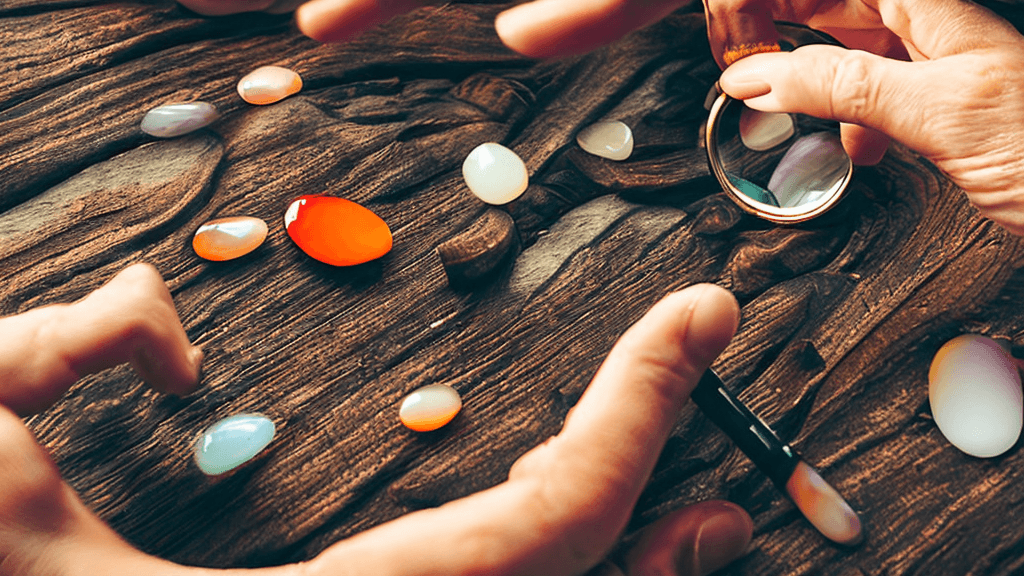
- **Chalcedony**: Fibrous, waxy luster; comes in every color (carnelian=orange, chrysoprase=apple-green).
- **Agate & Jasper**: Both are chalcedony, but agate shows curved color bands while jasper is opaque, colored by iron oxides.
- **Onyx**: Parallel black-and-white agate bands; favored for carvings.
- **Flint & Chert**: Impure, dull-colored microcrystalline quartz; conchoidal fracture made them Stone-Age favorites.
Field Tip: If you can see individual crystal faces, you’re in the macrocrystalline camp. If the surface looks smooth or waxy, treat it as microcrystalline and expect a hardness of 7 either way.
Where to Find Quartz: Worldwide Hotspots & US Hotspots
Because quartz makes up ~12 % of continental crust, it literally crunches underfoot on every continent. The trick is finding collectible quality.
Global Localities
- **Brazil**: Minas Gerais produces museum-grade amethyst cathedrals and world-record citrine.
- **Madagascar**: Rose quartz spheres the size of cars, plus pastel-blue quartz with asterism.
- **Namibia**: Brandberg produces legendary amethyst-scepter combos perched on smoky stems.
- **Switzerland**: Alpine clefts yield sharp, water-clear “Alpine” quartz with chlorite phantoms.
- **China**: Guangdong Province—smoky quartz columns up to 6 m long.
Top US Rockhounding Sites by State
- **Arkansas**: Mount Ida & Jessieville—world-class clear quartz; public mines like Wegner Quartz Crystal Ranch let you dig your own.
- **North Carolina**: Little Switzerland—emerald-hunting areas also cough up euhedral quartz with chlorite phantoms.
- **Georgia**: Graves Mountain (private, but 4 public digs per year) yields rutinated quartz—golden needles of rutile inside clear crystals.
- **California**: Himalaya Mine, San Diego County—pink and green tourmaline included in quartz.
- **Maine**: Mount Mica & Mount Apatite—smoky quartz “logs” up to 30 cm.
- **Colorado**: Pikes Peak granite—amazonite + smoky quartz combos coveted by competitive collectors.
- **Arizona**: Fire agate locality near Safford—you can collect microcrystalline quartz with iridescent goethite layers.
Planning a trip? Drop GPS pins with Rockhound so you never forget that perfect pocket. The app records elevation, photos, and notes even when you’re off-grid.
Field Tests to Distinguish Quartz from Look-Alikes
Even experienced rockhounds get fooled. Below are the five most common imposters and the quickest ways to eliminate them.
Glass (Manufactured)
- Hardness ~5.5; won’t scratch glass reliably. Quartz will.
- Tiny spherical bubbles = dead giveaway.
- Mold marks or swirl lines = man-made.
Calcite
- Hardness 3; a copper penny (3.5) scratches it easily. Quartz laughs at pennies.
- Effervesces in vinegar or 10 % HCl; quartz does nothing.
- Rhombohedral cleavage (three perfect cleavage planes); quartz has zero cleavage—only conchoidal fracture.
Feldspar
- Hardness 6; quartz (7) scratches it.
- Two cleavage planes at nearly 90°; break surfaces show flat, shiny faces rather than curved ones.
- Exsolution lamellae (stripes) common in microcline; quartz is homogeneous.
Topaz
- Hardness 8; topaz scratches quartz but not vice-versa. (If you have a known topaz point, test delicately.)
- Perfect basal cleavage; quartz has none.
- Higher specific gravity (3.5); topaz feels distinctly heavier.
Halite (Rock Salt)
- Tastes salty (seriously—just a quick tap to the tongue). Wash afterward.
- Soluble in water; quartz is invincible in H₂O.
- Cubic cleavage; quartz never forms cubes.
Cheat Sheet: Keep a small steel knife blade, a square of window glass, and a porcelain streak tile in your field pouch. Three tests, thirty seconds, zero doubt.
Common Identification Mistakes & How to Avoid Them
- **Assuming “clear = quartz.”**
- Fluorite, topaz, and glass are also clear. Run the full hardness + streak checklist.
- **Testing on weathered surfaces.**
- Desert varnish or iron staining can mask luster. Break off a fresh chip with a rock hammer for reliable results.
- **Ignoring fracture.**
- Conchoidal fracture is the quartz signature. If the broken surface shows flat planes, think feldspar or calcite.
- **“It’s purple so it must be amethyst.”**
- Fluorite is purple and soft. Verify hardness before celebrating a $500 crystal.
- **Relying on photographs alone.**
- Lighting and camera white-balance can fake colors. Use the Rockhound app’s AI ID as a second opinion, not a sole verdict.
Value & Collectibility: When Is a Quartz Crystal Worth Money?
Most quartz is worth pennies per pound, but the exceptions keep collectors digging.
Price Drivers
- **Color saturation**: Deep Siberian-purple amethyst or burnt-orange citrine commands more than pale shades.
- **Size without damage**: A flawless 10 cm amethyst point can fetch $100; the same point with a chipped termination drops to $10.
- **Rarity of inclusion**: Black tourmaline (schorl) sprays inside quartz double the value; bright green fuchsite plates can triple it.
- **Location**: Arkansas “Herkimer diamond” doubly terminated crystals demand a premium over similar Mexican material.
- **Ethical sourcing**: Documented, mine-to-market provenance increases collector confidence and price.
Rough Price Ranges (per carat retail, 2024 market)
- Clear quartz: $0.01–$0.10
- Milky quartz: $0.005–$0.02
- Amethyst: $2–$50 (Siberian > 10 ct deep purple up to $100/ct)
- Natural citrine: $4–$30 (heat-treated drops to $1/ct)
- Smoky quartz: $0.50–$10 (morion black > 50 ct can hit $25/ct)
- Rose quartz (massive): $0.02–$0.50
- Exceptional scepters or phantom quartz: $20–$200 (museum pieces unlimited)
Pro Tip: Record purchase price, locality, and vendor notes in Rockhound’s collection manager. When you trade or sell, you’ll have bulletproof provenance.
Cleaning, Care & Display: Keep Your Quartz Sparkling
Quartz is tough, but it’s not invincible. Follow these steps to avoid “shock fracture” and permanent haze.
Post-Field Cleaning
- Dry scrub with a soft toothbrush to remove loose dirt.
- Soak overnight in warm water + a few drops of dish soap.
- Use a bamboo skewer to pick clay from crevices—metal tools can scratch softer included minerals.
- Rinse; if iron stains persist, soak 4–6 h in Iron Out (follow label). Rinse thoroughly.
Deep Cleaning for Stubborn Oxide Crust
- **Oxalic acid bath**: 1 heaping tablespoon per gallon of hot water outdoors. Soak 1–3 days; check every 12 h. Wear gloves and goggles.
- **Ultrasonic cleaner**: Safe for solid quartz but NEVER use on included specimens—vibration can shatter internal phantoms or loosen scepter caps.
Display Tips
- Keep out of direct sunlight; amethyst fades to grayish quartz in ~6 months of UV exposure.
- Use museum wax to secure pieces on shelves—earthquakes and toddlers happen.
- Label with locality and collection date; future you (or your heirs) will thank you.
Historical & Cultural Significance: From Stone Age to Silicon Age
- **Paleolithic tools**: Chert and flint (microcrystalline quartz) provided the first cutting edges—some 2 million years ago.
- **Roman roads**: Chalcedony and agate were crushed into mortar for durability; Roman engineers valued its weather resistance.
- **Medieval Europe**: Clear quartz spheres served as “crystal balls” for scrying; birefringence made images appear to float.
- **Indigenous North America**: Arkansas novaculite (microcrystalline quartz) formed the basis of Caddoan tool trade networks.
- **Modern tech**: Every computer chip relies on ultra-pure synthetic quartz grown via hydrothermal process; the same atomic lattice we collect powers the device you’re reading on.
Cultural Curiosity: The word “quartz” comes from the old German “Quarz,” first used in 1530 by Georgius Agricola, the father of mineralogy.
Quick Reference Cheat Sheet (Print & Laminate)
Hardness 7? Scratches glass → ✔
Conchoidal fracture? Curved, shell-like breaks → ✔
White streak? On porcelain → ✔
No vinegar fizz? No reaction → ✔
Light passes through? At least edges → ✔
If any box fails, re-evaluate before adding to your collection.
Ready to Rock? Download the Ultimate Field Companion
Even with this guide in your back pocket, nothing beats a second opinion. The Rockhound app’s AI mineral ID was trained on 500+ varieties and works 100 % offline—perfect for remote dig sites. Snap a pic, get an instant match, and log GPS coordinates so you can return next season. Ready to level-up your rockhounding game?
[Download Rockhound for free](https://getrockhound.com) and start identifying quartz like a pro today!
Ready to start hunting?
Download Rockhound and identify your finds instantly with AI-powered recognition. Track your expeditions with GPS and build your digital collection.
Download Rockhound