How to Identify Jasper: Varieties & Collecting Guide
Unlock the secrets of jasper identification with this comprehensive guide. From ocean jasper to picture jasper, learn the physical properties, collecting hotspots, and expert tips to build your mineral collection.
In this article
- What is Jasper? Understanding This Chalcedony Variety
- Jasper Identification: Key Characteristics to Look For
- Types of Jasper: A Comprehensive Field Guide
- Where to Find Jasper: Prime Collecting Locations
- Distinguishing Jasper from Similar Minerals
- Common Jasper Identification Mistakes
- Value and Collectibility of Jasper
- Care and Cleaning of Jasper Specimens
- Historical and Cultural Significance
- Advanced Jasper Identification Techniques
- Building Your Jasper Collection
- Using Technology for Jasper Identification
- Legal and Ethical Collecting
# How to Identify Jasper: Varieties & Collecting Guide
Jasper is one of the most beloved stones among rockhounds, yet correctly identifying jasper and its many varieties can challenge even experienced collectors. This comprehensive guide will transform you from a casual admirer into a confident jasper expert, capable of distinguishing genuine specimens from look-alikes in the field.
Whether you're drawn to the orbicular patterns of ocean jasper, the scenic landscapes of picture jasper, or the rich reds of classic jasper, this guide covers everything you need to know. We'll explore physical properties, worldwide collecting locations, identification techniques, and the cultural significance that makes jasper a cornerstone of any serious mineral collection.
What is Jasper? Understanding This Chalcedony Variety
Before diving into jasper identification, let's establish what makes this stone unique. Jasper is a cryptocrystalline variety of quartz, specifically a form of chalcedony that contains significant amounts of foreign materials. These impurities—primarily iron oxides and other minerals—give jasper its characteristic opacity and rich color variations.
Unlike transparent quartz crystals, jasper is completely opaque, even in thin slices. This fundamental characteristic separates it from other chalcedony varieties like agate, which shows translucency. The stone's name comes from the Greek "iaspis," meaning "spotted stone," perfectly describing its often mottled or patterned appearance.
Physical Properties of Jasper
Understanding jasper's physical properties is crucial for accurate identification in the field:
Hardness: 6.5-7 on the Mohs scale
- This means jasper can scratch glass and steel
- Test by trying to scratch a glass bottle or steel knife blade
- If the stone scratches glass easily, it's likely jasper or similar quartz variety
Luster: Vitreous to dull
- Freshly broken surfaces show a waxy to glassy shine
- Weathered surfaces may appear dull or chalky
- Polish brings out the best luster in finished specimens
Crystal System: Hexagonal (though cryptocrystalline)
- Individual crystals are too small to see without magnification
- Forms in massive habits rather than distinct crystal shapes
- Breaks with a conchoidal (curved) fracture typical of quartz
Specific Gravity: 2.5-2.9
- Feels slightly heavier than common rocks of similar size
- This density helps distinguish it from plastic imitations
- Experienced collectors can often "heft test" specimens
Cleavage: None
- Breaks irregularly rather than along defined planes
- This makes jasper excellent for tool-making and carving
- Fracture surfaces are typically smooth and curved
Jasper Identification: Key Characteristics to Look For
The Opacity Test
The single most reliable way to identify jasper is the opacity test. Hold your specimen up to a strong light source—even the thinnest edge should block light completely. If you see any translucency, you're likely holding agate or another chalcedony variety. This test works because jasper's dense concentration of impurities prevents light transmission.
Surface Patterns and Textures
Jasper displays incredible variety in its patterns, each offering clues to its identity:
Orbicular Patterns: Circular or eye-like formations, especially prominent in ocean jasper
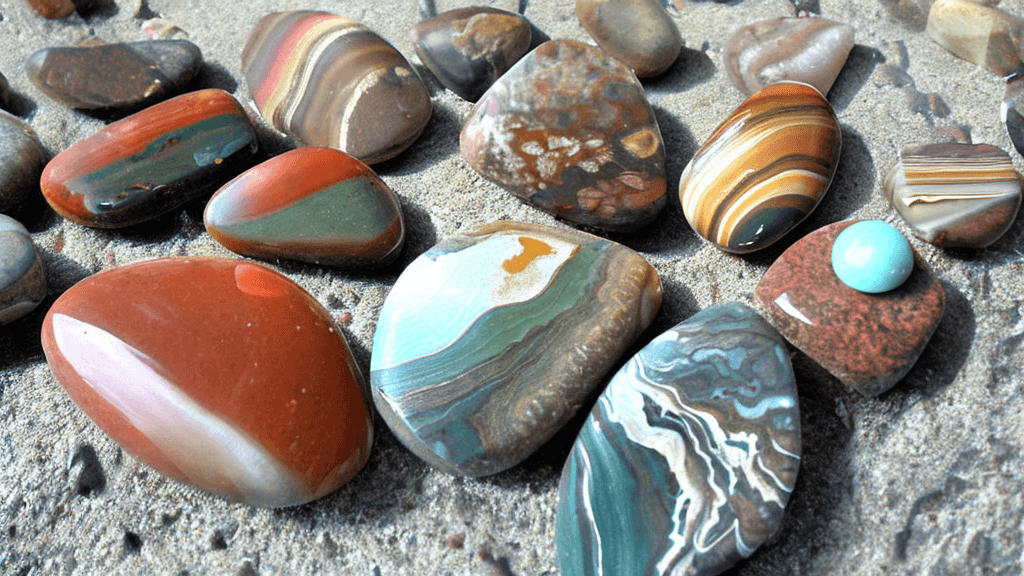
Banded Structures: Layered patterns that may be straight, wavy, or irregular
Picture Scenes: Landscape-like formations unique to picture jasper
Mottled Appearance: Random color distribution creating spotted effects
Brecciated Forms: Angular fragments cemented together in dramatic patterns
Color Variations and Their Causes
Jasper's stunning color palette results from various mineral impurities:
Red Jasper: Iron oxide (hematite) creates the classic brick-red color
Yellow Jasper: Iron hydroxide produces golden and mustard tones
Green Jasper: Chlorite, actinolite, or other iron silicates cause green hues
Brown Jasper: Various iron oxides and organic materials create earth tones
Black Jasper: High concentrations of iron or manganese oxides
Multi-colored Jasper: Combinations of multiple impurities create complex patterns
Types of Jasper: A Comprehensive Field Guide
Ocean Jasper
Ocean jasper, also known as orbicular jasper, represents one of the most sought-after varieties. Found exclusively along the northwest coast of Madagascar, this jasper type features distinctive circular patterns that resemble eyes, orbs, or cellular structures.
Identifying Features:
- Prominent orbicular (circular) patterns in various colors
- Colors range from white and pink to green and yellow
- Often shows concentric rings within the orbs
- Mined from tidal areas, sometimes visible only at low tide
Collecting Tips:
- Madagascar sources are becoming depleted, increasing value
- Look for specimens with well-defined, colorful orbs
- High-grade ocean jasper shows multiple colors and clear patterns
- Lower grades may have fewer or less distinct orbs
Picture Jasper
Picture jasper earns its name from scenic patterns that resemble natural landscapes, desert scenes, or abstract art. These formations result from the flow and deposition of silica-rich solutions through porous rock.
Identifying Features:
- Landscape-like patterns with apparent "horizons" and "skies"
- Colors typically in earth tones: browns, tans, grays, and creams
- Patterns appear painterly or photographic in quality
- Often shows dendritic (tree-like) or linear formations
Notable Locations:
- Biggs Junction, Oregon: Famous for high-quality picture jasper
- Bruneau Canyon, Idaho: Produces scenic jasper with canyon-like patterns
- Other western US states yield excellent specimens
Red Jasper
Red jasper represents the classic variety that most people picture when they hear "jasper." Its rich, brick-red color has made it popular throughout human history.
Identifying Features:
- Consistent red color ranging from brick to blood-red
- Often shows subtle banding or mottling
- May contain small white or yellow inclusions
- Color remains consistent throughout the specimen
Historical Significance:
- Used by ancient Egyptians for jewelry and amulets
- Native American tribes valued it for ceremonial objects
- Medieval Europeans believed it had protective properties
Brecciated Jasper
Brecciated jasper forms when existing jasper deposits break apart and are re-cemented by silica-rich solutions, creating angular fragment patterns.
Identifying Features:
- Angular fragments of various colors cemented together
- Sharp boundaries between different colored areas
- Often contains clear or gray chalcedony filling between fragments
- Creates dramatic, artistic patterns highly valued by collectors
Other Notable Varieties
Leopard Skin Jasper: Spotted patterns resembling big cat coats
Zebra Jasper: Distinct black and white banding
Mookaite Jasper: Australian variety with purple, red, and yellow patterns
Polychrome Jasper: Multi-colored desert jasper from Madagascar
Rainforest Jasper: Green varieties with orbicular patterns
Where to Find Jasper: Prime Collecting Locations
United States Locations
Oregon:
- Biggs Junction area for picture jasper
- Owyhee region for scenic varieties
- Public collection areas with proper permits
- Best collected during spring and fall when weather permits
California:
- Mojave Desert regions contain multiple jasper varieties
- Clear Creek area produces red and yellow jaspers
- Many locations on BLM land allow limited collecting
- Check current regulations before collecting
Idaho:
- Bruneau Canyon for picture jasper
- Owyhee Mountains for various types
- Some areas require permits or have seasonal restrictions
- 4WD vehicles often necessary for access
Arizona:
- Various desert locations throughout the state
- Apache region for red and yellow varieties
- Check land ownership before collecting
- Summer collecting requires extreme precautions
Texas:
- Woodward Ranch for unique picture jasper
- Various locations in west Texas
- Some sites on private land (get permission)
- Best collected in spring and fall
International Locations
Madagascar:
- Only source of true ocean jasper
- Remote coastal locations accessible by boat
- Mining operations limited by tides and weather
- High-quality specimens command premium prices
Australia:
- Mooka Creek for mookaite jasper
- Various locations throughout Western Australia
- Some areas require permits for collecting
- Unique varieties not found elsewhere
Brazil:
- Multiple jasper deposits throughout the country
- Often found in association with agate deposits
- Export regulations may apply to large quantities
- Commercial operations dominate many areas
India:
- Rajasthan region produces various jasper types
- Often cut and polished for international market
- Traditional mining methods still in use
- Quality varies significantly between locations
Distinguishing Jasper from Similar Minerals
Jasper vs. Agate
This is the most common identification challenge for beginners:
Jasper: Completely opaque, no light passes through even thin edges
Agate: Shows translucency, especially along thin edges or banded areas
Jasper: Denser, more solid appearance
Agate: Often shows characteristic banding with translucent layers
Quick Test: Hold specimen to strong light. If any light passes through, it's agate or another chalcedony variety, not jasper.
Jasper vs. Flint/Chert
These quartz varieties share similar properties:
Jasper: Typically shows more color variation and patterns
Flint/Chert: Usually gray, black, or white with less distinct patterns
Jasper: Often more colorful and decorative
Flint/Chert: More uniform in appearance
Both share the same hardness and opacity, making field identification challenging without considering color and pattern.
Jasper vs. Petrified Wood
Some jaspers, particularly picture varieties, can resemble petrified wood:
Jasper: Shows conchoidal fracture when broken
Petrified Wood: May show wood grain patterns or cellular structures
Jasper: More uniform in texture
Petrified Wood: Might retain organic textures
Look for cellular structures or wood grain patterns to identify petrified wood.
Jasper vs. Rhyolite
Certain rhyolite varieties can mimic jasper appearance:
Jasper: Hardness of 6.5-7, scratches glass
Rhyolite: Softer (5-6), may not scratch glass effectively
Jasper: Shows conchoidal fracture
Rhyolite: May show more granular fracture surfaces
Always perform a hardness test when identification is uncertain.
Common Jasper Identification Mistakes
Assuming All Red Rocks Are Jasper
Many red stones get misidentified as jasper:
- Red jasper has specific hardness and fracture characteristics
- Other red stones might be jasperite, sandstone, or altered volcanic rocks
- Always confirm with hardness tests and opacity checks
Confusing Jasper with Man-Made Materials
Modern imitations can fool collectors:
- **Glass:** Too perfect, may contain bubbles, wrong fracture pattern
- **Plastic:** Too light, warm to touch, shows mold marks
- **Ceramic:** May have glaze coating, uniform color distribution
Quick Tests:
- Weight: Real jasper feels substantial
- Temperature: Stone feels cooler than plastic
- Fracture: Jasper shows characteristic conchoidal fracture
Regional Misidentifications
Local names can confuse identification:
- Some areas call any pretty stone "jasper"
- Trade names don't always reflect geological reality
- Stick to scientific properties for reliable identification
Value and Collectibility of Jasper
What Makes Jasper Valuable
Several factors determine jasper value:
Pattern Quality: Clear, distinct patterns command higher prices
Color Intensity: Vibrant, saturated colors are more desirable
Rarity: Unusual varieties or locations increase value
Size: Large, solid pieces suitable for display or cutting
Condition: Undamaged specimens with natural surfaces
Market Categories
Museum/Collector Grade: Exceptional patterns, colors, or size
Lapidary Grade: Suitable for cutting and polishing
Tumbling Grade: Good for creating tumbled stones
Commercial Grade: Lower quality for mass-produced items
Price Ranges (2024 Market)
Common Red Jasper: $0.50-5 per pound
Picture Jasper: $2-50 per pound depending on quality
Ocean Jasper: $10-200+ per pound based on patterns
Exceptional Specimens: $500+ for museum-quality pieces
Investment Potential
While most jasper has modest value, certain factors can increase investment potential:
- Depleted sources (like original ocean jasper deposits)
- Exceptional patterns or colors
- Large, display-quality specimens
- Historical significance or provenance
Care and Cleaning of Jasper Specimens
Basic Cleaning Methods
Initial Cleaning:
- Remove loose dirt with soft brush
- Rinse with warm water
- Use mild dish soap if needed
- Avoid harsh chemicals or acids
Removing Tough Stains:
- Iron stains: Use Iron Out or similar product
- Organic stains: Dilute bleach solution (test first)
- Calcium deposits: Dilute vinegar solution
Storage and Display
Storage Tips:
- Keep specimens separated to prevent scratching
- Use padded containers or individual wrapping
- Label with location and date collected
- Maintain stable humidity levels
Display Considerations:
- Avoid direct sunlight (colors may fade)
- Use stable stands or mounts
- Rotate displayed pieces periodically
- Keep away from heat sources
Preservation Techniques
Consolidation:
- Some porous jaspers benefit from consolidation
- Use specialized stone consolidants
- Test on small area first
- Follow manufacturer instructions carefully
Polishing:
- Jasper takes excellent polish
- Use progressive grits from 60 to 3000+
- Final polish with tin oxide or cerium oxide
- Professional lapidary equipment recommended
Historical and Cultural Significance
Ancient Civilizations
Egyptian Use:
- Carved scarabs and amulets
- Believed to have protective properties
- Found in tombs and burial sites
- Associated with fertility and renewal
Greek and Roman Periods:
- Used for seals and signet rings
- Believed to prevent fever and epilepsy
- Carved into decorative objects
- Mentioned in classical literature
Native American Traditions:
- Used for tools and weapons
- Sacred stone in many tribes
- Believed to have healing properties
- Used in ceremonies and rituals
Medieval Beliefs
During medieval times, jasper was thought to:
- Protect against poison and venom
- Bring rain during drought
- Ensure safe childbirth
- Ward off evil spirits and nightmares
Modern Cultural Impact
Metaphysical Properties:
- Considered a grounding stone
- Associated with stability and strength
- Used in crystal healing practices
- Popular in New Age communities
Artistic Applications:
- Popular material for carvers
- Used in jewelry making
- Featured in architectural elements
- Collectible as natural art
Advanced Jasper Identification Techniques
Microscopic Examination
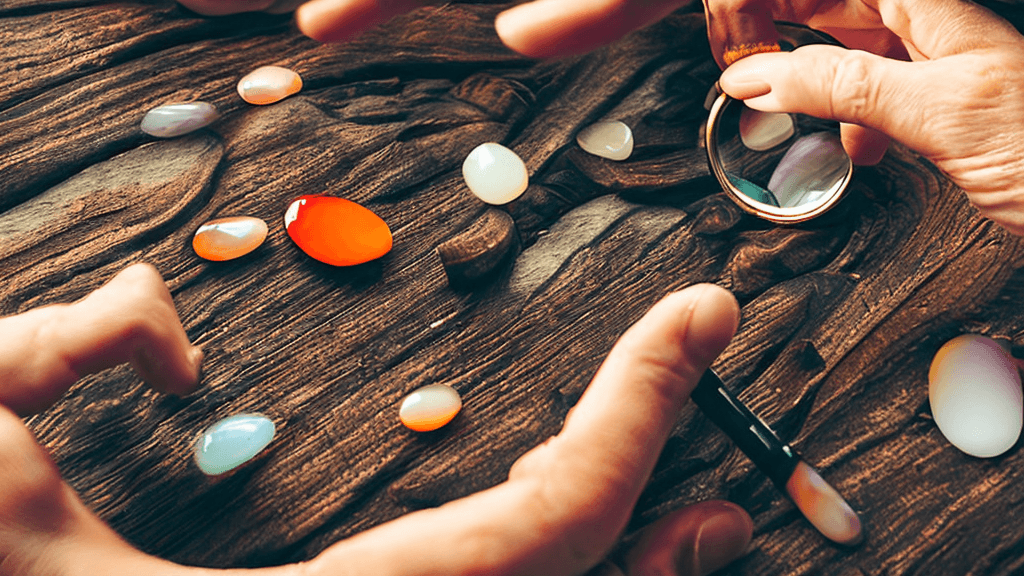
Using a 10x loupe or microscope reveals:
- Cryptocrystalline quartz structure
- Impurity distribution patterns
- Evidence of treatment or enhancement
- Surface texture details
UV Light Testing
Some jasper varieties show:
- Fluorescence under UV light
- Different patterns visible under UV
- Evidence of dye treatment
- Natural vs. artificial coloration
Specific Gravity Testing
For precise identification:
- Weigh specimen in air
- Weigh specimen suspended in water
- Calculate specific gravity
- Compare to jasper range (2.5-2.9)
Professional Laboratory Analysis
When absolute certainty is needed:
- X-ray diffraction analysis
- Spectrographic examination
- Thin section petrography
- Electron microprobe analysis
Building Your Jasper Collection
Starting Your Collection
Essential Tools:
- 10x hand lens or loupe
- Steel nail or knife for hardness tests
- Small spray bottle for wetting specimens
- Collection bags or containers
- Field notebook for recording locations
Best Practices:
- Start with local varieties
- Join rockhound clubs for guidance
- Attend shows and exhibitions
- Document collection locations
- Learn from experienced collectors
Organizing and Cataloging
Documentation System:
- Assign catalog numbers
- Record collection location and date
- Note identifying characteristics
- Photograph specimens
- Maintain digital database
Storage Solutions:
- Custom cabinets with drawers
- Plastic display boxes
- Egg cartons for small specimens
- Custom foam inserts
- Climate-controlled storage
Trading and Networking
Building Relationships:
- Attend rock and mineral shows
- Join online forums and groups
- Participate in club activities
- Visit museums and collections
- Exchange with international collectors
Using Technology for Jasper Identification
Mobile Apps for Rockhounds
Modern technology makes jasper identification easier than ever. The [Rockhound app](https://getrockhound.com) offers AI-powered mineral identification—simply take a photo and get instant identification help. This is particularly useful when you're unsure whether you've found jasper or a similar-looking mineral.
The app also helps you track your collecting locations using GPS, so you can return to productive sites or share locations with fellow collectors. With offline functionality, it works even in remote collecting areas without cell service.
Online Resources
Databases:
- Mindat.org for mineral data
- Local geological survey websites
- University mineral collections
- International jasper societies
Identification Forums:
- Reddit rockhound communities
- Facebook mineral groups
- Specialized jasper forums
- Expert identification services
Photography Tips
For Identification:
- Use natural light when possible
- Include scale reference (coin, ruler)
- Photograph wet and dry surfaces
- Capture multiple angles
- Document unique features
For Documentation:
- High-resolution images
- Macro photography for details
- Consistent lighting setup
- Color calibration tools
- Multiple views of each specimen
Legal and Ethical Collecting
Land Ownership Rights
Public Land:
- BLM land often allows casual collecting
- National parks prohibit all collecting
- State parks vary by location
- Always check current regulations
- Limited quantities typically allowed
Private Land:
- Always obtain permission
- Respect landowner wishes
- Leave gates as found
- Share findings with owner
- Offer specimens as thanks
Responsible Collecting Practices
Environmental Considerations:
- Minimize surface disturbance
- Don't use heavy equipment
- Fill any holes you dig
- Stay on established roads
- Pack out all trash
Safety Guidelines:
- Tell someone your plans
- Carry first aid supplies
- Bring plenty of water
- Watch for dangerous wildlife
- Have communication devices
Conclusion: Your Jasper Journey
Mastering jasper identification takes time, practice, and patience, but the rewards are well worth the effort. From the orbicular wonders of ocean jasper to the scenic landscapes captured in picture jasper, each specimen tells a unique geological story spanning millions of years.
As you develop your identification skills, remember that even experienced collectors continue learning. Each collecting trip offers new opportunities to test your knowledge and expand your understanding of these remarkable stones. The jasper identification techniques outlined in this guide provide a solid foundation, but nothing replaces hands-on experience in the field.
Whether you're building a collection for scientific study, artistic appreciation, or simple enjoyment, jasper offers something for everyone. Its durability ensures your specimens will last generations, while its endless variety guarantees you'll never run out of new patterns and colors to discover.
Ready to start your jasper collecting adventure? Download the [Rockhound app](https://getrockhound.com) to identify specimens on-the-go, track your collecting locations, and connect with fellow enthusiasts. With AI-powered identification and GPS tracking, you'll never miss an opportunity to add spectacular jasper specimens to your collection.
Happy rockhounding, and may your next collecting trip reveal the perfect jasper specimen you've been seeking!
Ready to start hunting?
Download Rockhound and identify your finds instantly with AI-powered recognition. Track your expeditions with GPS and build your digital collection.
Download Rockhound