Understanding the Mohs Hardness Scale: Complete Rock ID Guide
Learn exactly how to use the Mohs hardness scale to identify minerals in the field. From penny-friendly scratch tests to advanced lab techniques, this 3,000-word guide gives rockhounds every tool needed to confidently determine mineral hardness and build a better collection.
In this article
- What Is the Mohs Hardness Scale and Why Every Rockhound Needs It
- How the Mohs Hardness Scale Works: The Science in Plain English
- Step-by-Step Scratch Test Instructions for Perfect Results Every Time
- DIY & Budget Kits: Mohs Hardness Test Tools for Under $10, $25, and $100
- Mohs Hardness Scale Chart: Printable Field Reference
- Common Mistakes That Ruin Scratch Tests (and How to Fix Them)
- Real-World Scenarios: How to Test in the Field
- Troubleshooting Tricky Minerals
- Advanced Techniques: When You Need More Than Mohs
- Recording & Organizing Your Data
- Teaching Kids the Mohs Scale: Family Rockhounding Fun
- Mohs vs. Other Hardness Scales: What You Need to Know
- Quick-Reference Hardness Table: 50 Common Rocks & Minerals
- Frequently Asked Questions About the Mohs Hardness Scale
- Further Learning & Authoritative Resources
- Ready to Rock? Download the Rockhound App
What Is the Mohs Hardness Scale and Why Every Rockhound Needs It
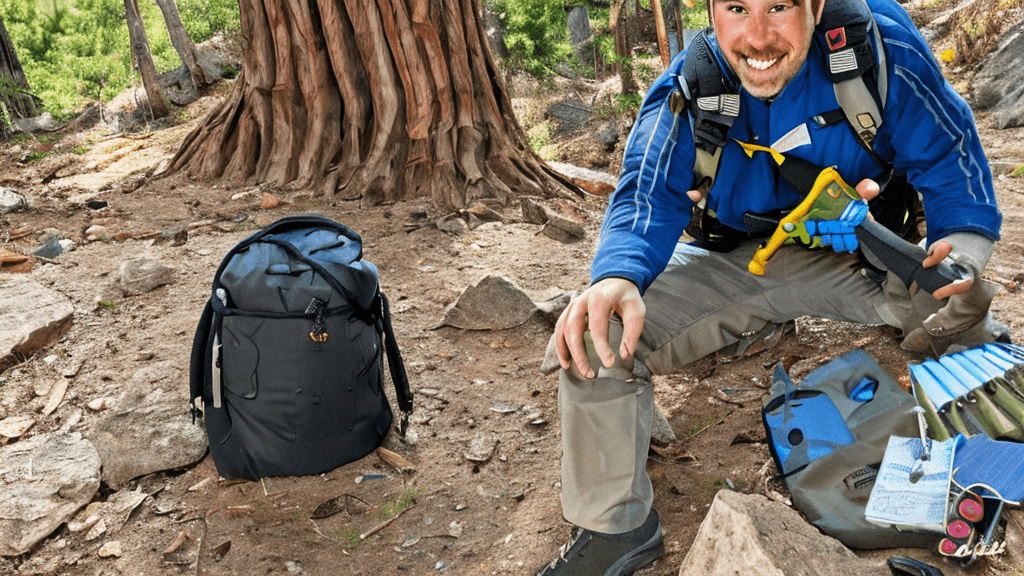
The Mohs hardness scale is the fastest, cheapest, and most reliable field test for mineral identification. Created in 1812 by German mineralogist Friedrich Mohs, it ranks 10 common minerals from softest (1) to hardest (10) based on their ability to scratch one another. Unlike costly lab tests, the Mohs scale fits in your pocket and works in seconds—perfect for rock hunting trips, estate-sale digs, or backyard exploration.
In this 3,000-word guide you’ll learn:
- How the scratch test actually works (and why a streak is not a scratch)
- Budget, mid-range, and pro-level kits that fit every pocket
- 12 common mistakes that ruin test results
- Troubleshooting for tricky minerals (looking at you, quartz-coated calcite)
- Real-world field scenarios with photos you can match on sight
- Exactly where the Rockhound app can save you time when you’re unsure
Bookmark this page, print the quick-reference chart in section 4, and you’ll never again wonder “Is this fluorite or apatite?” while you’re miles from cell service.
How the Mohs Hardness Scale Works: The Science in Plain English
Scratch = Win Rule
A mineral can scratch any mineral with a lower number. If specimen A scratches specimen B, A is harder. If neither scratches the other, they’re equal (or close enough in the field).
Key Terms You’ll See Everywhere
- **Hardness number**: 1–10 position on the Mohs scale
- **Reference mineral**: One of the 10 index minerals used as a standard
- **Scratch test**: Dragging one material across another to see which leaves a permanent groove
- **Streak**: Powder left when a mineral is rubbed on ceramic—not the same as a scratch!
Mohs Index Minerals Quick List
- Talc
- Gypsum
- Calcite
- Fluorite
- Apatite
- Orthoclase feldspar
- Quartz
- Topaz
- Corundum
- Diamond
Memorize the first five; you’ll use them most often in the field.
Why Mohs Isn’t Linear
The gap between 9 and 10 is bigger than 1 through 8 combined. In practical terms, corundum (9) will scratch topaz (8) easily, but diamond (10) will obliterate corundum. Don’t assume each step is equal—think of it as a handy ranking, not a ruler.
Step-by-Step Scratch Test Instructions for Perfect Results Every Time
What You Need
- Flat, fresh surface on your unknown mineral (weathered rinds fool novices)
- Reference item of known hardness (section 4 lists cheap options)
- 10× hand lens or loupe
- Good light—sunlight or a white LED
- Notebook or the Rockhound app to log GPS and result
The 5-Second Field Method
- Brace the unknown on a firm surface or against your thigh.
- Hold the reference item like a pencil and **drag firmly** across the surface in one direction.
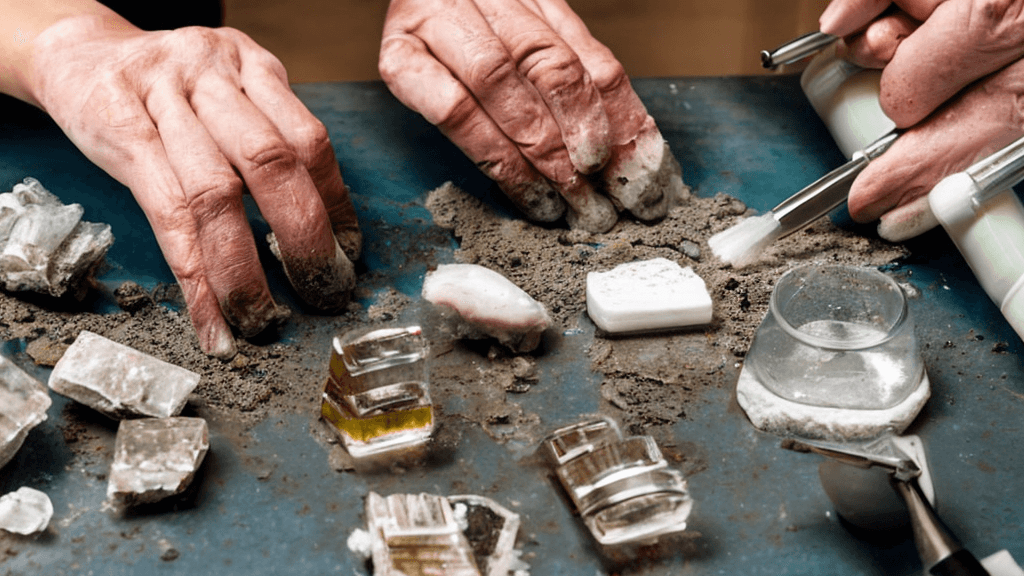
- Inspect with your loupe. A true scratch leaves a permanent groove you can feel with a fingernail.
- Reverse the test: scratch the reference with the unknown. Record whichever direction works.
- Log the lowest number that the unknown can scratch—that’s its Mohs hardness.
Photo Example
Imagine a translucent gray pebble from Lake Superior. It scratches fluorite (4) but not apatite (5). Hardness = 4.5 ± 0.5. Open Rockhound, snap a photo, let the AI suggest “barite or dolomite,” and you’ve narrowed it down in under 30 seconds.
Pro Tip: The Fingernail Test
Your fingernail is 2.5. If a mineral scratches it, you’re already at calcite (3) or harder. This quick check saves time on every hike.
DIY & Budget Kits: Mohs Hardness Test Tools for Under $10, $25, and $100
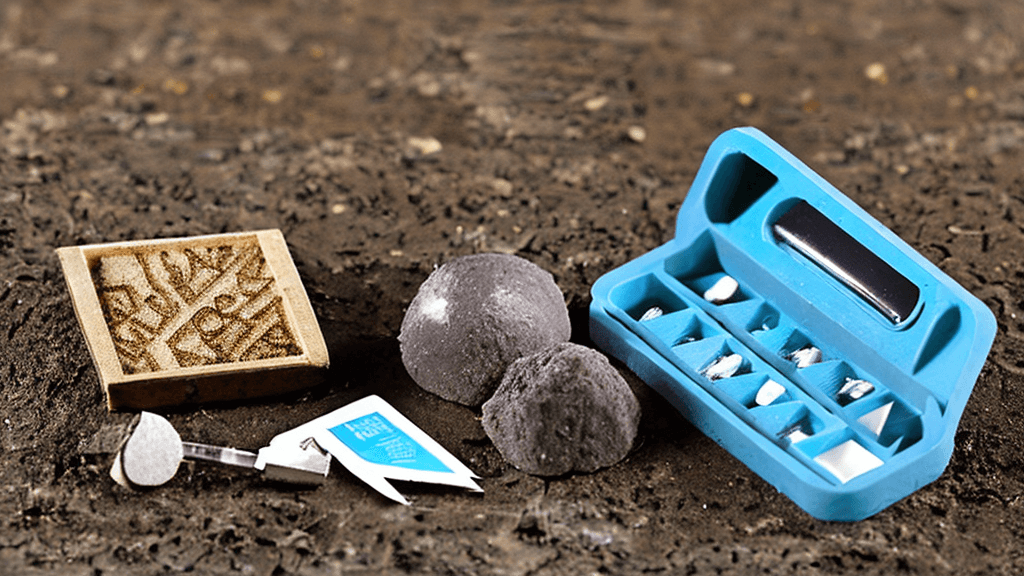
Under $10 (Pocket Kit)
- Copper penny (pre-1982 is best) – 3.5
- Steel nail or paperclip – 5.5
- Piece of quartz gravel from landscaping – 7
- Small glass tile – 5.5
Total: Free–$3. Wrap items in duct tape for grip and label with a Sharpie.
Under $25 (Starter Kit)
Add:
- Set of 5 index mineral chips (talc, gypsum, calcite, fluorite, apatite) on Etsy or eBay
- Fold-up 10× loupe
- Mini streak plate (unglazed porcelain)
- Altoids tin to keep everything dry
Under $100 (Enthusiast Kit)
- Complete 10-mineral Mohs set (buy from geology supply stores; avoid plastic boxes that let minerals rub together)
- Diamond file (600 grit) for cleaning test surfaces
- Double-ended pick with replaceable tungsten and brass tips
- Head-mounted LED loupe (hands-free magic in the field)
- Waterproof field notebook & Fisher space pen
Bonus: Free Household Items Cheat-Sheet
| Item | Hardness |
|------|----------|
| Fingernail | 2.5 |
| Copper penny | 3.5 |
| Steel knife | 5.5 |
| Glass plate | 5.5 |
| Sandpaper (quartz) | 7 |
| Ceramic mug bottom | 7 |
| Tungsten carbide scribe | 8.5 |
Print this, laminate with packing tape, and stick it in your glove box.
Mohs Hardness Scale Chart: Printable Field Reference
Download the high-resolution PDF [INTERNAL: printable mohs chart] and tape it inside your field notebook. The chart includes:
- Index mineral photo
- Common color varieties
- Quick test item
- Similar-hardness look-alikes to double-check
Common Mistakes That Ruin Scratch Tests (and How to Fix Them)
- **Testing weathered surfaces**
Fix: Break open a fresh chip with a rock hammer or tap with your shovel to expose unoxidized material.
- **Confusing streak with scratch**
A colored line that wipes away is just powdered mineral. A real scratch digs a groove you can feel.
- **Using plated items**
Gold-plated jewelry is soft; chrome plating can be 8+. Know your metal or stick to known minerals.
- **Applying uneven pressure**
Hold the reference at 45° and push firmly but steadily. Jabbing produces false scratches.
- **Ignoring crystalline direction**
Kyanite has 5.5 parallel to length and 7 across. Test twice at 90° if the mineral feels “grabby.”
- **Forgetting temperature**
Cold quartz (7) can fool you into thinking it’s softer. Warm specimens in your pocket for a minute if it’s below freezing.
Real-World Scenarios: How to Test in the Field
Scenario 1: Beach Agate vs. Chalcedony
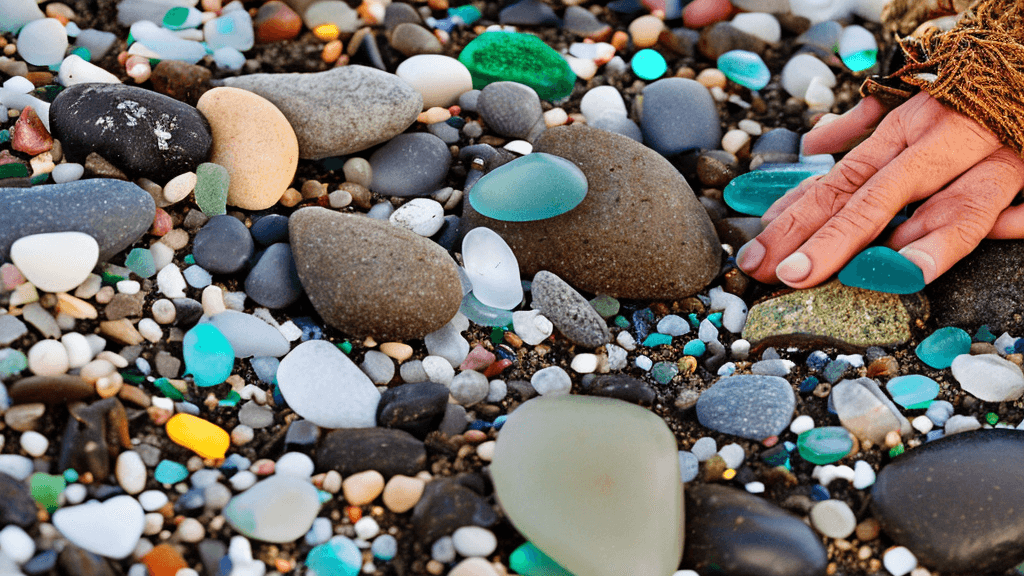
Both are quartz (7), but agates often have a waxy skin that feels softer. Scratch the broken interior, not the rind. Result: 7 → quartz family. Use Rockhound to log GPS so you can return at low tide.
Scenario 2: Estate-Sale “Diamond” Pin
A faceted clear stone scratches glass (5.5) and quartz (7) but not topaz (8). Hardness 7–7.5 = probably zircon or synthetic spinel. You just saved $200.
Scenario 3: Kid’s Backyard Find
Child hands you a shiny yellow nugget. It bends under fingernail pressure → hardness 2.5. Scratch test on penny leaves gold streak but penny also scratches the nugget. It’s pyrite (6–6.5) coated with weathered sulfur—time for a fun lesson, not a payday.
Troubleshooting Tricky Minerals
- **Quartz-coated calcite**: Vinegar drop fizzes on calcite but not quartz. Scratch underneath the coating.
- **Opal (5.5–6.5) vs. chalcedony (7)**: Opal has conchoidal fracture and feels slightly plastic. Test twice; if result varies, it’s opal.
- **Graphite in schist**: Appears soft but embedded in harder matrix. Isolate a single flake for testing.
- **Meteorite candidates**: Metal grains are ~5, surrounding silicates 5–6. Use a fresh slice; weathered surfaces rust and mislead.
Advanced Techniques: When You Need More Than Mohs
Sclerometer Spring Test
Hand-held device with a spring-loaded point gives numeric hardness values. Calibrate against quartz before heading out. $60 on Amazon—nice upgrade if you sell specimens.
Micro-indentation (Lab)
Vickers or Knoop machines measure precise hardness for specimens you plan to catalog scientifically. Send a thumbnail chip to a university lab for $25–$40.
Rockwell Conversion Chart
If you have metalworking tools, convert Rockwell HRC to Mohs using published tables. Handy if you’re already into knifemaking.
Recording & Organizing Your Data
Use a simple four-column log:
- Date & GPS
- Photo number
- Hardness result
- Best ID guess
Rockhound auto-fills 1–2 when you snap the photo and saves it offline—great when you’re outside cell range. Export as CSV when you get home and merge with your desktop database.
Teaching Kids the Mohs Scale: Family Rockhounding Fun
Turn testing into a treasure hunt:
- Hide numbered minerals in a sandbox
- Give each child a penny, nail, and quartz chip
- First to correctly rank all five wins a glow-in-the-dark rock sticker
Safety note: supervise glass plates and sharp edges. Younger kids can test on sidewalk chalk (1) and marble chips (3) first.
Mohs vs. Other Hardness Scales: What You Need to Know
- **Mohs**: Ordinal (1–10), field-friendly
- **Vickers**: Micro-scale, precise, lab-based
- **Brinell/Rockwell**: Used for metals; convert with tables if curious
- **Shore**: Rubber and plastics—ignore for minerals
Stick with Mohs for field ID; use Vickers only if you’re publishing research.
Quick-Reference Hardness Table: 50 Common Rocks & Minerals
| Mineral/Rock | Hardness | Field Test Hint |
|--------------|----------|-----------------|
| Talc | 1 | Feels soapy, flakes under thumb |
| Serpentine | 2.5–4 | Often greener than talc |
| Halite | 2.5 | Tastes salty, cubic cleavage |
| Biotite | 2.5–3 | Thin flexible sheets |
| Gypsum | 2 | Fingernail flakes it |
| Calcite | 3 | Vinegar fizzes |
| Dolomite | 3.5–4 | Vinegar fizzes only if powdered |
| Fluorite | 4 | May fluoresce UV |
| Apatite | 5 | Hexagonal crystals |
| Obsidian | 5–5.5 | Conchoidal fracture, glassy |
| Magnetite | 5.5–6.5 | Magnetic, black streak |
| Feldspar | 6 | Two cleavage planes at 90° |
| Pyrite | 6–6.5 | Brass-yellow, black streak |
| Quartz | 7 | Scratches glass, no cleavage |
| Garnet | 6.5–7.5 | Dodecahedral shape |
| Amethyst | 7 | Purple quartz |
| Topaz | 8 | Orthorhombic crystals |
| Corundum | 9 | Hexagonal plates, often gray |
| Diamond | 10 | Scratches everything, adamantine luster |
(Print the full 50-item PDF at [INTERNAL: hardness table download])
Frequently Asked Questions About the Mohs Hardness Scale
Q: Can I damage my valuable specimen?
A: Yes—always test on an inconspicuous or broken area. Museum-grade pieces should be lab-tested.
Q: Why does my quartz scratch topaz?
A: Impurities can mislead. Re-test with a fresh point; topaz should win. If not, your “topaz” may be citrine (also 7).
Q: Does temperature affect hardness?
A: Slightly. Most minerals stiffen when cold, but differences are small until sub-zero. Warm in your hand first.
Q: Is there an app for that?
A: Rockhound’s AI suggests probable minerals once you enter hardness and upload a photo—no signal required.
Further Learning & Authoritative Resources
- [INTERNAL: beginner guide to mineral identification]
- [INTERNAL: best rockhounding field guides]
- Mindat.org hardness database
- U.S. Geological Survey mineral photo library
- Local mineral clubs (search Facebook + your state)
Ready to Rock? Download the Rockhound App
You now have every tool to master the Mohs hardness scale. Pack your penny, quartz, and steel—then let Rockhound handle the logging, GPS breadcrumbs, and AI-powered suggestions when you’re stumped. Grab the free iOS app today and turn every hike into a treasure hunt.
Happy rockhounding!
Ready to start hunting?
Download Rockhound and identify your finds instantly with AI-powered recognition. Track your expeditions with GPS and build your digital collection.
Download Rockhound