Beach Rock Hunting: Ultimate Shoreline Treasure Guide
Discover how to find stunning agates, colorful sea glass, and unique coastal rocks with our comprehensive beach rock hunting guide. Learn the best techniques, essential gear, and prime locations for your next shoreline treasure hunt.
In this article
- Understanding Beach Rocks and Minerals
- Essential Beach Rock Hunting Equipment
- Prime Beach Rock Hunting Locations
- Step-by-Step Beach Rock Hunting Process
- Common Mistakes to Avoid
- Pro Tips from Veteran Beach Rock Hunters
- Troubleshooting Common Problems
- Building and Organizing Your Beach Rock Collection
- Resources for Continued Learning
- Conclusion
# Beach Rock Hunting: Finding Treasures Along the Shore
There's something magical about combing a beach at sunrise, eyes scanning the sand and pebbles for that perfect specimen. Beach rock hunting combines the thrill of treasure hunting with the serenity of ocean waves, making it one of the most accessible and rewarding forms of rockhounding. Whether you're searching for colorful agates, smooth beach stones, or pieces of sea glass weathered by decades of tides, this comprehensive guide will transform you from a casual beachcomber into a skilled beach rock hunter.
Understanding Beach Rocks and Minerals
What Makes Beach Rocks Special
Beach rocks tell a unique story of geological transformation. Unlike rocks found inland, coastal rocks have been shaped by the relentless action of waves, sand, and time. This natural tumbling process creates smooth, polished specimens that are often more beautiful than their rough counterparts found elsewhere.
The constant movement of water sorts rocks by size and density, creating natural concentrations of similar materials. This means once you understand the patterns, you'll know exactly where to look for specific types of specimens during your beach rock hunting adventures.
Common Types of Beach Rocks and Treasures
Agates are perhaps the most coveted finds in beach rock hunting. These banded chalcedony specimens come in a stunning array of colors, from the classic orange and brown carnelian agates to the rare blue and green varieties. Beach agates typically have a waxy luster and may appear dull when dry but reveal their true beauty when wet or polished.
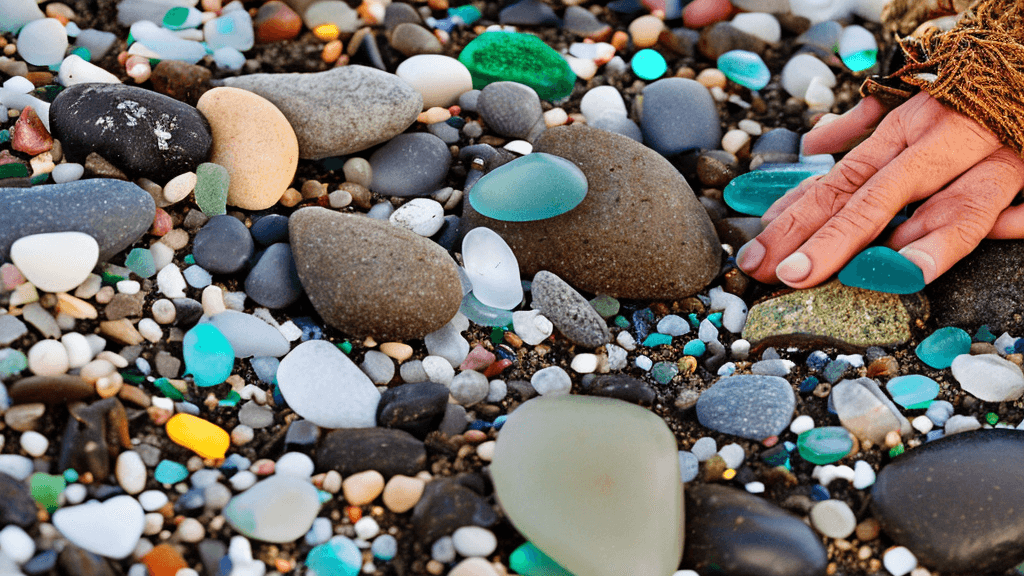
Sea Glass hunting has exploded in popularity over the past decade. These fragments of bottles, windows, and other glass items have been naturally tumbled smooth by decades of wave action. The most common colors are green, brown, and white, while blue, red, and yellow pieces are considered rare treasures worth seeking during your beach stone hunting expeditions.
Jasper specimens found on beaches often display beautiful patterns and colors. These opaque chalcedony varieties can show orbital patterns, scenic landscapes, or solid colors ranging from red and yellow to green and black. Beach-found jasper is typically well-polished by natural processes.
Petoskey Stones (Hexagonaria coral fossils) are specific to certain Great Lakes beaches but represent how fossils can be excellent targets for beach rock hunting. These distinctive six-sided coral patterns become visible when the stones are wet or polished.
Quartz Varieties including clear quartz, smoky quartz, and amethyst occasionally wash up on beaches. These crystals may be water-worn but can still display their characteristic hexagonal crystal structures.
Essential Beach Rock Hunting Equipment
Basic Budget Setup ($25-50)
Starting your beach rock hunting journey doesn't require expensive equipment. A basic setup includes:
- **Collection bags or buckets**: Mesh bags allow water drainage and sand removal
- **Hand trowel or small shovel**: Useful for digging in gravel deposits
- **Spray bottle**: Helps identify specimens by making them wet
- **Magnifying glass**: 10x magnification helps examine details
- **Field guide**: Waterproof guide to beach rocks and minerals
- **Smartphone**: For GPS location marking and photos
Intermediate Kit ($50-150)
As you progress in beach rock hunting, consider upgrading to:
- **Rockhound's apron**: Multiple pockets for organization
- **Classification screens**: Stackable screens for sorting by size
- **UV flashlight**: Some minerals fluoresce under UV light
- **Digital scale**: For weighing significant finds
- **Rock pick**: Lightweight version for careful extraction
- **Waterproof camera**: Better than phone for documentation
Professional Beach Hunting Tools ($150-500+)
Serious beach rock hunters invest in professional equipment:
- **High-powered UV lamps**: Reveal fluorescent minerals
- **Underwater metal detector**: Finds iron-bearing minerals
- **Rock tumblers**: For polishing specimens at home
- **Microscope**: For detailed mineral identification
- **GPS unit**: Precise location marking for productive spots
- **Rockhound app**: Like Rockhound for AI identification and tracking
Prime Beach Rock Hunting Locations
Identifying Productive Beaches
Not all beaches are created equal for rock hunting success. The best locations typically feature:
Gravel Deposits: Areas where larger pebbles and small rocks accumulate, often at the high tide line or in stream mouths. These natural concentrations make searching more efficient.
Erosion Zones: Places where cliffs or banks are actively eroding often release fresh material. Winter storms frequently expose new specimens.
Stream Mouths: Where freshwater streams meet the ocean, they often carry minerals from inland deposits. These mixing zones can yield unexpected treasures.
Protected Coves: Areas protected from strong wave action often accumulate finer materials, including small agates and sea glass pieces.
North America's Best Beach Rock Hunting Destinations
Pacific Northwest: The beaches from Northern California through Oregon and Washington are world-famous for agate hunting. The agate beds along the Oregon coast, particularly around Newport and Lincoln City, produce exceptional specimens. These areas benefit from ancient volcanic activity that created abundant chalcedony deposits.
Great Lakes Region: Lake Superior's beaches are renowned for agates, particularly the famous Lake Superior agates with their distinctive red and brown banding. Michigan's Petoskey stone beaches offer unique fossil hunting opportunities.
Eastern Seaboard: Maine's rocky coast produces interesting specimens, while New Jersey's southern beaches are known for quartz varieties and occasional fossils. The Chesapeake Bay region offers unique bay-specific varieties.
California Coast: From the famous Jade Cove in Big Sur to the agate beaches of Northern California, the Golden State offers diverse beach rock hunting opportunities. Moonstone Beach in Cambria lives up to its name with abundant moonstone specimens.
International Hotspots
Cornwall, England: Historic mining areas have enriched beaches with diverse minerals
Cape Town, South Africa: Unique geological formations create varied beach specimens
Queensland, Australia: Agate beaches and thunder egg deposits
Nova Scotia, Canada: Agate and amethyst locations along the Bay of Fundy
Step-by-Step Beach Rock Hunting Process
Pre-Hunt Preparation (1-2 Hours Before)
- **Check Tide Charts**: Low tide exposes the most beach area and concentrates materials. Aim to arrive 1-2 hours before the lowest point.
- **Review Weather Conditions**: Recent storms often expose fresh material. Light rain can actually help by making rocks wet and revealing their true colors.
- **Research Local Regulations**: Some beaches prohibit collection or have restrictions on quantities. Check local rules and protected area designations.
- **Plan Your Route**: Identify access points, parking, and potential hazards. Mark GPS coordinates for productive areas using apps like Rockhound.
- **Prepare Equipment**: Charge devices, pack refreshments, and organize your gear for easy access.
The Beach Hunting Technique
Phase 1: Initial Survey (15-30 minutes)
Walk the entire beach area, noting gravel concentrations, erosion zones, and potential collection spots. Don't collect yet—just observe and plan your strategy.
Phase 2: Systematic Search (1-3 hours)
Work methodically in sections:
- Start at the high tide line where heavier materials concentrate
- Examine gravel deposits carefully, looking for wet or unusual colors
- Check areas where streams or seeps enter the beach
- Investigate exposed bedrock or large boulder areas
Phase 3: Detailed Examination (30-60 minutes)
Return to promising areas for detailed searching:
- Get down close to the ground for better visibility
- Use your spray bottle to wet suspicious specimens
- Check both dry and wet areas as different specimens show up better in different conditions
Phase 4: Documentation and Collection
- Photograph specimens in situ when possible
- Record GPS coordinates for significant finds
- Note environmental conditions for future reference
- Properly document your collection for later identification
Advanced Techniques for Experienced Hunters
Night Hunting with UV Lights: Some agates and minerals fluoresce under UV light, making night hunting productive. The contrast between fluorescent specimens and dark backgrounds can reveal hidden treasures.
Underwater Searching in Shallow Water: Using a snorkel and mask, carefully search shallow water areas where heavier minerals concentrate. This technique requires calm conditions and good visibility.
Winter Storm Chasing: The period immediately after winter storms often yields the best specimens as waves expose fresh material. However, safety should always be the priority.
Gravel Bar Excavation: Carefully excavating in gravel bars can reveal layered deposits where heavier materials concentrate at the base. Use proper tools and fill any holes you create.
Common Mistakes to Avoid
Beginner Errors That Cost Treasures
Mistake 1: Moving Too Quickly
Many beginners walk too fast and scan too broadly. Effective beach rock hunting requires slow, methodical searching. Take your time and examine areas carefully.
Mistake 2: Relying Only on Dry Specimens
Many treasures only reveal their beauty when wet. Always carry a spray bottle and regularly wet potential specimens for proper evaluation.
Mistake 3: Ignoring Small Specimens
Beginning collectors often overlook small pieces, but some of the most valuable agates and rare minerals are found in smaller sizes. Collect representative samples for later evaluation.
Mistake 4: Poor Documentation
Failing to record find locations and conditions wastes valuable information. Use your smartphone or Rockhound app to document everything systematically.
Mistake 5: Hunting at the Wrong Time
Ignoring tide schedules, weather patterns, and seasonal variations significantly reduces success rates. Plan your trips around optimal conditions.
Advanced Collector Pitfalls
Over-Collecting: Experienced hunters sometimes collect too much material, making later processing overwhelming. Be selective and focus on quality over quantity.
Discounting Common Varieties: Even common specimens can be exceptional examples. Develop an eye for quality regardless of species.
Ignoring Local Knowledge: Failing to engage with local collectors and shop owners misses valuable insider information about productive locations and conditions.
Safety Complacency: Experienced hunters sometimes take unnecessary risks in pursuit of specimens. Always prioritize safety, especially in remote locations or poor weather.
Pro Tips from Veteran Beach Rock Hunters
Insider Secrets for Maximum Success
Master the "Agate Eye": Train your vision to spot the characteristic waxy luster of agates, even when they're dirty or partially buried. Many collectors recommend practicing with known specimens to develop this skill.
Leverage Seasonal Patterns: Different seasons expose different materials. Winter storms often reveal fresh gravel deposits, while summer low tides may expose areas usually underwater.
Network with Local Communities: Join local rockhound clubs and online forums. Members often share real-time information about productive locations and conditions.
Develop Collection Themes: Instead of collecting everything, focus on specific types like red agates, sea glass hearts, or fossil specimens. This focused approach often yields better displays and collections.
Use Technology Strategically: Apps like Rockhound can identify specimens in real-time, helping you learn while hunting. GPS tracking helps return to productive spots.
Weather and Timing Strategies
Post-Storm Windows: The 24-48 hours after significant storms often provide the best collecting opportunities as waves have rearranged deposits and exposed fresh material.
Tidal Sequences: Multiple consecutive low tides allow access to areas normally underwater. Plan extended trips around these sequences.
Seasonal Considerations: Different materials concentrate during different seasons. Learn the patterns for your preferred hunting areas.
Lighting Optimization: Overcast days often provide better visibility than bright sunshine, which can create glare that hides specimens.
Troubleshooting Common Problems
When You're Not Finding Anything
Problem: Hours of searching with no significant finds
Solutions:
- Change elevation levels - move higher or lower on the beach
- Switch search patterns - try different directions or grid patterns
- Adjust timing - different tides or weather conditions
- Seek local advice - conditions may be temporarily poor
Problem: Everything looks the same - can't identify good specimens
Solutions:
- Practice with known specimens at home
- Use identification apps like Rockhound for real-time learning
- Join guided field trips with experienced collectors
- Focus on one type of specimen initially
Equipment and Safety Issues
Problem: Gear gets damaged by saltwater
Prevention:
- Rinse equipment with freshwater after each use
- Use protective cases for electronics
- Choose marine-grade materials when possible
Problem: Getting cut or injured while hunting
Prevention:
- Always wear appropriate footwear
- Use tools instead of hands when possible
- Carry a basic first aid kit
- Know your limits in terms of physical exertion
Collection and Storage Challenges
Problem: Specimens get mixed up or lost
Solutions:
- Use multiple collection containers organized by type
- Label finds immediately with location and date
- Photograph specimens in situ when possible
- Keep detailed field notes
Problem: Can't identify specimens later
Solutions:
- Take multiple photos from different angles
- Note specific characteristics while fresh
- Use identification apps immediately
- Join online identification forums
Building and Organizing Your Beach Rock Collection
Initial Processing and Cleaning
Freshwater Rinse: Immediately upon returning home, rinse all specimens with freshwater to remove salt and sand. Salt residue can damage specimens over time.
Sorting System: Create initial categories based on obvious characteristics - agates, jasper, sea glass, fossils, and unknowns. This makes later identification more manageable.
Documentation Setup: Create a catalog system that includes find location, date, and any notable characteristics. Digital photos should be taken of both dry and wet specimens.
Advanced Organization Strategies
Themed Collections: Organize by color, location, mineral type, or other logical themes. Themed collections often make more impressive displays and are easier to explain to others.
Cataloging Systems: Develop a numbering system and maintain detailed records. Include GPS coordinates, photographs, and identification information.
Display Considerations: Plan displays that show specimens to best advantage. Consider lighting, background colors, and viewing angles.
Long-term Preservation
Storage Environment: Maintain stable temperature and humidity. Avoid attics, basements, or areas with extreme fluctuations.
Material-Specific Care: Learn the specific needs of different materials. Some specimens may fade in light, while others might be damaged by certain storage materials.
Insurance Documentation: For valuable collections, maintain detailed records and photographs for insurance purposes.
Resources for Continued Learning
Essential Field Guides
- "Agates of the Oregon Coast" by James R. Martin
- "Sea Glass Hunter's Handbook" by C.S. Lambert
- "Rockhounding the Great Lakes" by Bruce Mueller
- "Pacific Coast Gem & Mineral Guide" by James R. Mitchell
Online Communities and Forums
- Facebook groups for regional rockhounding
- Reddit communities like r/rockhounds and r/mineralcollecting
- Specialized forums for agate hunting and sea glass collecting
- Instagram hashtags for connecting with other collectors
Educational Opportunities
- Local rockhound clubs and societies
- Community college geology courses
- Museum workshops and field trips
- Online courses in mineral identification
Apps and Digital Tools
- **Rockhound**: AI-powered mineral identification and GPS tracking
- Mindat.org: Comprehensive mineral database
- Rock identification apps for real-time learning
- GPS apps for marking productive locations
Conclusion: Your Beach Rock Hunting Journey Begins
Beach rock hunting offers an unparalleled combination of outdoor adventure, scientific discovery, and treasure hunting excitement. With the knowledge from this comprehensive guide, you're equipped to begin finding your own shoreline treasures. Remember that every expert was once a beginner, and every impressive collection started with a single specimen.
The key to success in beach rock hunting lies in combining patience with knowledge, using the right tools, and understanding the unique conditions that create these natural treasures. Whether you're searching for colorful agates along the Oregon coast, hunting for sea glass in New England, or exploring your local beaches for the first time, each expedition offers the potential for exciting discoveries.
Start with the basics outlined in this guide, invest in quality equipment appropriate for your budget, and most importantly, get out there and start hunting. Document your finds using tools like the Rockhound app, connect with local collecting communities, and build your knowledge through experience and continued learning.
The beaches are waiting, and every tide brings new opportunities for discovery. Your next great find might be just a wave away. Download the Rockhound app today to start identifying your specimens and tracking your collecting adventures. Happy hunting!
Ready to start your beach rock hunting adventure? Download the Rockhound app for AI-powered mineral identification, GPS expedition tracking, and access to our community of collectors. Visit [getrockhound.com](https://getrockhound.com) to start your journey today!
Ready to start hunting?
Download Rockhound and identify your finds instantly with AI-powered recognition. Track your expeditions with GPS and build your digital collection.
Download Rockhound