Best Rock Hunting Spots in Nevada: 2026 Rockhound Guide
From Virgin Valley opal to Royston turquoise, Nevada delivers world-class rock hunting. Our 2026 guide maps 10+ GPS-verified sites, seasons, permits and camps—everything a rockhound needs.
In this article
- Why Nevada Is a Rock Hunting Powerhouse
- Nevada Rock Hunting Seasonality: When to Go
- 1. Virgin Valley Black Fire Opal Beds – Humboldt County
- 2. Royston (Tonopah) Turquoise District – Nye County
- 3. Garnet Hill – Ely, White Pine County
- 4. Rainbow Ridge Petrified Wood – Churchill County
- 5. Gold Creek – Elko County (Nevada Gold & Pyrite Cubes)
- 6. Black Rock Desert Nuggets – Washoe County
- 7. Yucca Mountain Chalcedony & Agate – Nye County
- 8. Crescent Valley Plume Agate – Lander County
- 9. Opal Mountain – Esmeralda County
- 10. Stillwater Range Petrified Palm – Churchill County
- Nevada Rock Clubs & Field-Trip Resources
- Essential Nevada Rockhounding Gear Checklist
- Safety & Leave-No-Trace for the Desert
- Final Thoughts & Next Steps
Nevada is a rockhound’s paradise—more than 80% of the state is public land, much of it open to casual collecting. The Silver State hides turquoise, opal, fire agate, petrified wood, gold specimens and over 50 other collectible minerals. Whether you’re chasing neon-green Royston turquoise or hoping to dig a rainbow Virgin Valley opal, this 2026 guide gives you the exact GPS waypoints, seasons, access rules and campsites the locals guard. Grab your Rockhound app, download the offline maps and let’s hit the desert.
Why Nevada Is a Rock Hunting Powerhouse
Nevada’s basin-and-range geology exposes everything from ancient seafloor beds (opals, ammonites) to Tertiary volcanic flows (fire agate, chalcedony) and classic turquoise-gold-copper vein systems. Combine that with liberal collecting limits on most BLM land—up to 25 lbs per day or 250 lbs per year, no permit—and you have arguably the best rockhounding destination in the lower 48.
Quick legal snapshot:
- BLM & Forest Service: casual collecting free, 250 lbs/yr limit
- State parks: prohibited unless signed
- Private claims: permission required (many advertised fee digs)
- Always close gates, pack out trash and fill dig holes
New to the rules? See our [INTERNAL: beginner guide] for a full legal checklist.
Nevada Rock Hunting Seasonality: When to Go
Desert heat is real. Prime seasons are:
- **Late February–May:** Cool days, blooming desert, accessible high-country roads before snowmelt washouts
- **September–November:** Stable weather, long daylight, post-monsoon soil softness for easier digging
- **Avoid mid-June–August:** 100 °F+ temps and monsoon flash-flood risk
- **December–January:** Great for southern sites like Opal Mountain, but some northern claims close for winter
Pro tip: Use Rockhound’s GPS breadcrumb trail when you venture off-road; desert washes all look the same on the way back.
1. Virgin Valley Black Fire Opal Beds – Humboldt County
GPS trailhead: 41.8388° N, 119.2780° W (Virgin Valley Campground)
What you’ll find: Precious black, cherry and lemon opal, hyalite, petrified wood
Best season: April–June & Sept–Oct (road can be impassable when wet)
Access: Paid fee digs required. Royal Peacock, Bonanza, Rainbow Ridge & Opal Queen mines all offer day passes ($75–$200) with 50–100 lbs take-home limits. Reservations fill for May weekends—book early.
Camping: Virgin Valley Campground (BLM, $8/night, no hookups, potable water) on site. Hot spring pool included.
Safety: Sudden squalls turn the access road (Humboldt Co. Rd 8A) into greasy bentonite. Carry shovel, boards and 4×4. Rattlesnakes common—watch where you plant your shovel.
Local club: Winnemucca District Gem & Mineral Club, monthly field trips spring/fall.
Collecting tips:
- Look for “play-of-color” in old bulldozer cuts; keep material moist for best visibility
- Bring spray bottle & tweezers—opal can crack under careless prying
- Photograph finds in shade; Rockhound’s AI ID works offline here to confirm hyalite vs. opal
2. Royston (Tonopah) Turquoise District – Nye County
GPS dumps: 38.0962° N, 117.2160° W (main talus pile, public side)
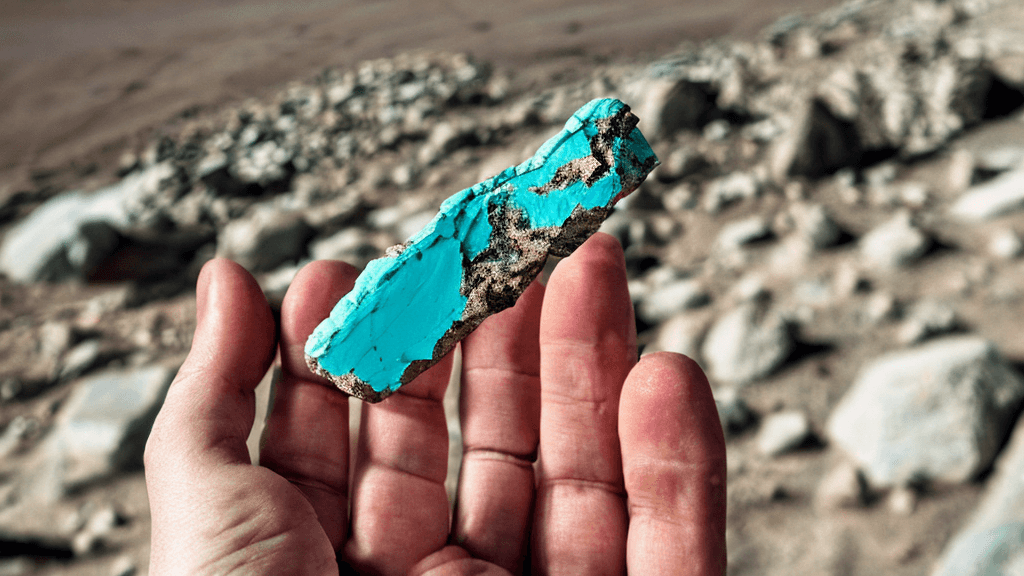
What you’ll find: Classic Nevada blue-green turquoise with brown limonite matrix
Best season: April–May & Sept (snow possible Oct–March at 6,500 ft)
Access: FREE on BLM side of the historic district. Claim boundaries are marked; stay west of the fence line. Day-use only, no mechanized equipment.
Camping: No camping at pit; dispersed OK 0.3 mi east on BLM road. Tonopah 12 mi north for hotels/RV parks.
Safety: Pit walls are unstable; collect only loose material on the dump. Elevations chilly at dawn—layer up.
Nearby fun: Central Nevada Museum (free) displays 50-lb turquoise boulder found here.
Rockhound pro hack: Shoot a photo of every specimen where you find it; the app’s geotag overlay is perfect for mapping which pile produced the best chert-free nuggets.
3. Garnet Hill – Ely, White Pine County
GPS parking: 39.2418° N, 114.8810° W (signed BLM turn-out)
What you’ll find: Dark-red almandine garnets in rhyolite matrix, topaz, obsidian chips
Best season: Year-round, but April–Oct for RV camping
Access: FREE public area; no permit. Bring rock hammer, chisels. Collecting limit 250 lbs/yr
Camping: Garnet Hill BLM campground 0.2 mi south (10 sites, free, fire grates, no water). Ely 8 mi for groceries.
Safety: Hillside is steep and loose; wear gloves. Rattlesnake habitat—stay alert.
Kid friendly: Yes—garnets sparkle enough in sunlight that children spot them quickly.
Extra credit: Combine with a stop at the adjacent Nevada Northern Railway museum for a historic steam-train ride after your morning hunt.
4. Rainbow Ridge Petrified Wood – Churchill County
GPS: 39.4720° N, 118.8200° W (turn-off NV-722)
What you’ll find: Multi-hued petrified logs, agate-replaced limbs, occasional opalized wood
Best season: March–May & Oct (summer temps 105 °F+)
Access: BLM land; FREE casual collecting. Avoid active mining claims on east side—posted.
Camping: Primitive dispersed camping along ridge; nearest services Fallon 25 mi.
Safety: Deep desert—carry 2 gal water per person, satellite comms if solo. Flash-flood washes after storms.
Permit note: None for surface collecting; notify BLM Carson City field office if you plan mechanized digging.
Collecting strategy: Petrified wood lies as float. Walk the shallow washes after spring runoff for best surface pieces. Anything over 250 lbs needs BLM special permit.
5. Gold Creek – Elko County (Nevada Gold & Pyrite Cubes)
GPS: 40.6510° N, 116.1630° W (end of maintained road)
What you’ll find: Sharp pyrite cubes in phyllite, flour-gold in creek gravels, occasional quartz-gold specimens
Best season: June–Oct (high elevation 6,800 ft; snow until May)
Access: FREE on BLM. Hand pans & sluices OK; dredging requires state permit. Stay out of posted private claims upstream.
Camping: Dispersed along creek for 14 days. Elko 45 min for hotels, casinos, showers.
Safety: Cougar & black-bear country—store food in vehicle. Hypothermia risk; water temps 45 °F even in July.
Local club: Elko Miners & Prospectors, weekly panning meet-ups June–Aug.
Rockhound bonus: Photograph pyrite cubes in situ; the app’s AI can distinguish marcasite from pyrite on texture, helping you leave the crumbly stuff behind.
6. Black Rock Desert Nuggets – Washoe County
GPS playa entrance: 40.7830° N, 119.1160° W (BRC main road)
What you’ll find: Obsidian flows, Apache tears, fire agate, and micro-gold in desert pavement
Best season: April–June & Sept (dry lakebed impassable when wet)
Access: FREE BLM. Stay on established roads; the playa is a designated wilderness study route—no vehicles on un-tracked surfaces.
Camping: Frog Pond dispersed (free) or Empire 4 mi for gas/store. No services on playa.
Safety: Deceptively remote—no cell north of Gerlach. GPS mandatory. Playa mud will trap a 4×4; wait 24 h after rain.
Permit: None for casual collecting. Commercial collecting requires BLM notice.
Insider tip: After the Burning Man event (late Aug/early Sept) volunteers often spot Apache tears churned up by art cars—prime pickings if you don’t mind MOOP sweeps.
7. Yucca Mountain Chalcedony & Agate – Nye County
GPS: 36.8370° N, 116.3800° W (south side ridge)
What you’ll find: Blue and orange chalcedony, banded agate nodules, jasper
Best season: Oct–Apr (summer 110 °F+ and radioactive folklore scare most people)
Access: BLM land west of the NNSS fence—FREE, but stay south of posted security zone. Carry ID; occasional guard patrols will ask your purpose.
Camping: Primitive; nearest RV park in Beatty 25 mi. Furnace Creek (Death Valley) 1 h if you want full hookups.
Safety: No radioactive risk outside the secure perimeter, but carry extra water—there is literally zero shade.
Nearby fun: Goldwell Open Air Museum for desert sculpture selfies.
Pro tactic: Hunt after a rare winter rain; the desert varnish washes off and pastel chalcedony stands out like candy.
8. Crescent Valley Plume Agate – Lander County
GPS pit: 40.0730° N, 116.5160° W (end of dirt spur)
What you’ll find: Red and yellow plume agate, fortification agate, sagenite
Best season: April–June & Sept (road clay becomes impassable gumbo when wet)
Access: BLM; FREE collecting. Several 40-acre claims exist—watch for posts and carsonite markers.
Camping: 14-day dispersed along Battle Mountain road; Battle Mountain RV 12 mi for showers/laundry.
Safety: Remote; tell someone your plan. Carry spare tire—sharp jasper rubble shreds sidewalls.
Local rock club: Austin NV Rockhounds, meet last Saturday each month, welcome visitors.
Collecting how-to: Plume agate forms in rhyolite voids. Follow the old dozer trenches and break open suspiciously round nodules; agate often rattles inside.
9. Opal Mountain – Esmeralda County
GPS: 37.7050° N, 117.6230° W (parking at mine ruins)
What you’ll find: Common opal seams (pink, green), fire opal flashes, chalcedony roses
Best season: Oct–May (6,200 ft; snow Dec–Feb)
Access: Free on BLM. Small-scale mining claims on north slope—respect claim markers.
Camping: Primitive at saddle; Goldfield 20 mi for fuel, snacks, haunted hotel.
Safety: Open shafts—keep kids & dogs close. Carry warm gear; temps swing 40 °F in hours.
Bonus: Combine with a stop at nearby International Car Forest of the Last Church for quirky photo ops.
Rockhound tip: Common opal looks chalk-dry. Spray with water and angle to sun—any fire flash jumps out so you don’t pack 50 lbs of duds home.
10. Stillwater Range Petrified Palm – Churchill County
GPS: 39.5530° N, 118.1210° W (high-clearance 4 mi)
What you’ll find: Silicified palm root, banded chert, fossilized coral heads
Best season: April–June (road washes out July monsoons)
Access: BLM; FREE. Wilderness boundary starts at ridge—no collecting beyond sign.
Camping: Dispersed at canyon mouth; Fallon 30 mi for supplies.
Safety: High-clearance road; clay when wet equals one-way slide. Bring tow strap.
Unique angle: Palm root polishes into psychedelic orbicular patterns—highly sought for cabochons.
Nevada Rock Clubs & Field-Trip Resources
- **Carson City Rockhounds** – Monthly claims access, loaner tools
- **Las Vegas Gem & Mineral Society** – Bus caravans to Virgin Valley, Black Rock
- **Reno Gem & Mineral Society** – Hosts August statewide swap; good place to trade Nevada turquoise
- **Nevada Mining Association** – Publishes annual claim status map ($15 digital)
Most clubs welcome drop-in visitors for a single field trip—dues average $25/yr and include liability insurance.
Essential Nevada Rockhounding Gear Checklist
- Rockhound app pre-loaded with offline Nevada topo & mineral ID pack
- 4×4 vehicle or at minimum AWD with all-terrain tires
- Two spare tires, tire-plug kit, 12-V compressor
- 2 gal water per person per day plus 2-day reserve
- Wide-brim hat, UV sleeves, SPF 50 (desert sun reflects)
- Leather gloves, 4-lb crack hammer, 12-inch pry bar, chisels
- Spray bottles & newspaper for wrapping opal/turquoise
- Paper copies of BLM collecting regulations (ranger checks)
- Personal locator beacon or satellite messenger
- Five-gallon bucket with gamma-seal lid (keeps turquoise from drying/cracking)
Safety & Leave-No-Trace for the Desert
- Tell someone your GPS route and return time; many areas have zero cell service
- Flash floods appear in minutes—never camp in a wash
- Fill holes and replace rocks; BLM monitors social media photos
- Pack out micro-trash (tape, wrappers)—ravens learn to associate shiny with food
- Respect claim markers: orange carsonite posts or aluminum caps mean NO
Final Thoughts & Next Steps
From world-famous Virgin Valley opal to the overlooked chalcedony roses of Opal Mountain, Nevada offers lifetime’s worth of rock hunting adventures. The state’s liberal BLM collecting rules, abundant dispersed camping and wide-open spaces mean you can still discover untouched spots—especially if you venture mid-week and use fresh GPS intel.
Ready to start ticking these sites off your bucket list? Download the Rockhound app before you leave home. Snap a photo of that mystery nodule and get an instant AI ID, drop GPS breadcrumbs so you never lose your way out of a desert wash, and build a digital collection log with photos, location and notes—all offline, because Nevada cell service is basically a myth.
Grab your maps, top off the tires and chase that Nevada turquoise. See you on the playa, rockhound!
CTA: Plan your 2026 Nevada rockhounding road trip today—download Rockhound on iOS and take the field guide, GPS tracker and mineral ID tool with you everywhere you dig.
Ready to start hunting?
Download Rockhound and identify your finds instantly with AI-powered recognition. Track your expeditions with GPS and build your digital collection.
Download Rockhound